
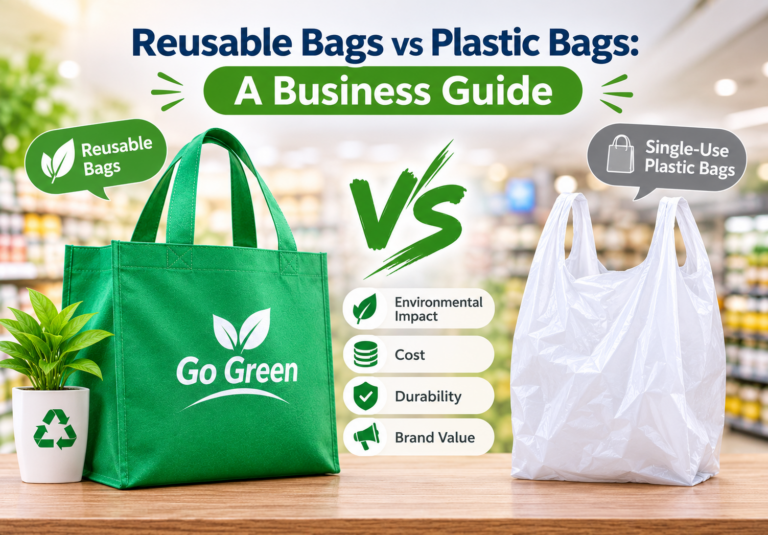

Choosing the right shopping bag is an important decision for retailers, supermarkets, distributors, and other businesses. A shopping bag is not only used to carry products. It can also influence customer experience, packaging costs, brand visibility, and a company’s environmental strategy.
For many years, single-use plastic bags have been widely used because they are lightweight, inexpensive, and convenient. However, growing environmental awareness, changing customer expectations, and plastic regulations have encouraged more businesses to consider reusable alternatives.
Reusable shopping bags, including PP non-woven bags, canvas bags, and other durable options, have become increasingly popular in retail and promotional packaging.
But are reusable bags always the better choice? Are single-use plastic bags still suitable for certain applications? And how should businesses evaluate the cost and environmental impact of each option?
In this guide, we compare reusable bags and single-use plastic bags to help businesses make informed packaging decisions.
1. What Are Reusable Bags and Single-Use Plastic Bags?
Before comparing their advantages and disadvantages, it is important to understand the main characteristics of these two packaging options.
Reusable Bags
Reusable bags are designed to be used multiple times rather than discarded after one shopping trip.
Common types include:
- PP non-woven shopping bags
- Woven polypropylene bags
- Cotton and canvas tote bags
- Reusable paper bags
- Polyester shopping bags
These bags are available in different materials, sizes, structures, and handle designs. Businesses can also customize them with logos, brand colors, promotional graphics, and other design elements.
PP non-woven bags are particularly popular for retail packaging because they combine lightweight construction with flexible customization options.
Single-Use Plastic Bags
Single-use plastic bags are generally lightweight bags designed for short-term use, often made from polyethylene such as HDPE or LDPE.
They are commonly used in supermarkets, convenience stores, grocery shops, and other retail environments.
Their main characteristics include:
- Low unit cost in many markets
- Lightweight construction
- Easy storage and distribution
- Convenient handling
- Suitability for lightweight products
However, these bags are often discarded shortly after use, which can contribute to plastic waste when collection and disposal systems are inadequate.
2. Reusable Bags vs Single-Use Plastic Bags: A Quick Comparison
The following table highlights the main differences businesses should consider.
| Comparison | Reusable Bags | Single-Use Plastic Bags |
|---|---|---|
| Intended use | Multiple uses | Usually one or a limited number of uses |
| Initial unit cost | Generally higher | Generally lower |
| Long-term value | Can provide value through repeated use | Requires frequent replacement |
| Durability | Depends on material and construction | Usually designed for lighter, short-term use |
| Customization | Extensive options for materials, colors, and printing | Custom printing may be available, depending on supplier |
| Brand exposure | Potentially repeated exposure through reuse | Usually limited to a shorter period |
| Storage | May require more storage space | Usually compact and easy to store |
| Environmental impact | Depends on material, production, reuse, and disposal | Depends on material, production, use, and waste management |
| Regulations | Subject to local product and packaging requirements | Often subject to restrictions or fees in some markets |
Neither option is automatically the best for every business. The right decision depends on the application, local regulations, customer behavior, and overall packaging strategy.
3. Environmental Impact: Which Option Is More Sustainable?
Environmental impact is one of the biggest reasons businesses are reconsidering single-use plastic bags.
Reusable bags can reduce the need for repeated purchases of disposable bags, but they also require materials, energy, and resources to manufacture.
The environmental comparison should therefore consider the entire life cycle of each product.
The Environmental Advantages of Reusable Bags
Reusable bags can provide environmental benefits when customers use them regularly.
For example:
- They can reduce demand for disposable shopping bags.
- Their manufacturing impact can be distributed across multiple uses.
- Durable construction may extend their useful life.
- They can become part of a long-term reusable shopping program.
However, a reusable bag that is used only once or twice may not deliver the expected environmental benefits.
The Environmental Limitations of Reusable Bags
Reusable bags are not impact-free.
PP non-woven bags are generally made from polypropylene, a plastic material primarily produced from fossil-based resources. Cotton bags also have environmental impacts associated with agricultural production, water use, and processing.
Some reusable bags contain additional materials, such as laminated films, coatings, or mixed-material components, which may complicate recycling.
Businesses should therefore avoid assuming that every reusable bag is automatically environmentally friendly.
The Environmental Impact of Single-Use Plastic Bags
Single-use plastic bags generally require relatively little material per bag and are lightweight to transport.
However, their short intended lifespan means that businesses may need to purchase large quantities repeatedly.
When bags are improperly discarded, they can contribute to litter and environmental pollution. Their actual impact also depends on local waste collection, recycling, and disposal systems.
Why Reuse Frequency Matters
Life cycle assessments (LCAs) compare the environmental impacts of products throughout their life cycles, including raw material extraction, manufacturing, transportation, use, and disposal.
Research reviewed by the United Nations Environment Programme has shown that reusable bags may need to be used multiple times before their environmental impacts become lower than those of conventional lightweight plastic bags in a given comparison.
The required number of uses varies depending on the materials, bag specifications, manufacturing processes, and environmental impact category being measured.
For businesses, the practical lesson is clear: choosing a reusable bag is only the first step. Encouraging customers to reuse it is equally important.
4. Cost Comparison: Which Option Is More Economical?
Cost is a major consideration for businesses purchasing shopping bags in bulk.
Single-use plastic bags generally have a lower initial unit price, making them attractive for businesses that distribute large quantities of bags.
Reusable bags usually cost more per unit because they may require more material, additional manufacturing processes, stronger construction, or more extensive printing.
However, comparing only the initial purchase price does not provide a complete picture.
Initial Purchase Cost
Single-use plastic bags are often suitable for businesses that need inexpensive packaging for high-volume, short-term applications.
Reusable bags may have a higher initial cost, especially when businesses choose heavier fabrics, reinforced handles, laminated surfaces, or custom printing.
Long-Term Purchasing Cost
If customers repeatedly use reusable bags, businesses may be able to reduce the need to provide replacement bags as frequently.
However, this benefit depends on customer behavior and the business’s distribution model.
For example, a retailer selling reusable bags rather than giving them away may generate additional packaging revenue.
Additional Cost Factors
When comparing suppliers, businesses should consider:
- Material type and GSM
- Bag dimensions
- Handle construction
- Printing colors and coverage
- Lamination and finishing
- Order quantity
- Packaging and transportation
- Quality requirements
A reusable bag is not necessarily the cheapest option per unit, but it may provide better value when durability, customer use, and marketing benefits are considered together.
5. Brand Marketing: Why Reusable Bags Offer More Opportunities
One major advantage of reusable shopping bags is their potential to support long-term brand visibility.
A branded reusable bag may accompany customers to supermarkets, shopping centers, workplaces, schools, and other public places.
Every additional use creates another opportunity for people to see the brand.
Businesses can use custom reusable bags to:
- Increase brand recognition
- Support seasonal promotions
- Improve the customer shopping experience
- Encourage repeat engagement
- Distribute promotional merchandise
- Strengthen brand identity
For example, a fashion retailer can create a custom tote bag that matches its visual identity. A supermarket can offer reusable shopping bags featuring its logo and brand colors. An event organizer can distribute branded bags containing promotional materials.
Single-use plastic bags can also carry printed logos, but their shorter intended lifespan generally provides fewer opportunities for repeated brand exposure.
For businesses investing in brand marketing, reusable bags can combine packaging and promotional functions in one product.
6. Which Types of Reusable Bags Should Businesses Consider?
Not all reusable bags are the same. Different materials are suitable for different business applications.
PP Non-Woven Bags
<text style=”display:none”></text>
PP non-woven bags are widely used by supermarkets, retail stores, promotional agencies, and wholesale distributors.
Their advantages include:
- Lightweight material
- Flexible sizes and structures
- Custom printing options
- Different fabric weights, commonly 70–120 GSM
- Sewn and heat-pressed constructions
- Flat, gusseted, foldable, and box-style designs
They are particularly suitable for businesses looking for practical reusable shopping bags with flexible customization options.
GSM refers to fabric weight, not guaranteed carrying capacity. Actual performance also depends on bag dimensions, seams, handles, and construction quality.
Canvas Bags
Canvas bags are often chosen by fashion brands, boutiques, lifestyle businesses, and premium retailers.
They provide a substantial fabric appearance and can be customized with different colors, dimensions, handles, and printing designs.
Their durability and style can make them suitable for repeated everyday use.
Woven PP Bags
Woven polypropylene bags are made from woven PP fabric and are often used for shopping, promotional packaging, and applications requiring a different fabric structure.
They are available in various sizes and can be customized according to business requirements.
Reusable Paper Bags
Reusable paper bag designs can be suitable for fashion stores, gift shops, and specialty retailers.
Their performance depends on paper grade, handle construction, reinforcement, and the conditions in which they are used.
Businesses should not assume that every paper bag is suitable for repeated use. The product must be designed for its intended application.
7. When Should Businesses Choose Reusable Bags?
Reusable bags are particularly suitable for businesses that want to combine practical packaging with brand promotion and repeated customer use.
Consider reusable bags in the following situations.
Supermarkets and Grocery Stores
Reusable shopping bags can support regular grocery shopping and help customers reduce their dependence on disposable carrier bags.
Fashion and Clothing Retailers
Custom reusable bags can complement the brand’s packaging style and provide customers with a bag they may continue using after their purchase.
Boutiques and Specialty Shops
Smaller retailers can use customized bags to create a consistent shopping experience and strengthen brand recognition.
Promotional Campaigns
Businesses can distribute branded reusable bags at exhibitions, product launches, conferences, and marketing events.
Corporate Events
Custom bags can be used as welcome gifts, conference bags, or promotional merchandise.
In these situations, the potential for repeated use and brand exposure can make reusable bags an attractive investment.
8. When Are Single-Use Plastic Bags Still Used?
Although many businesses are moving toward reusable packaging, single-use plastic bags may still have specific applications where they are permitted.
Examples include:
- Packaging certain lightweight retail products
- Separating items for hygiene purposes
- Providing secondary packaging
- Short-term packaging requirements
- Applications requiring specific moisture-resistant properties
However, businesses must consider local regulations before purchasing or distributing single-use plastic bags.
Some countries, regions, and cities have introduced restrictions, taxes, charges, or bans covering certain types of plastic carrier bags.
For international businesses, it is important to check the applicable requirements in each destination market rather than assuming the same rules apply everywhere.
Reusable bags are not automatically exempt from product, packaging, labeling, or environmental regulations either.
9. How Can Businesses Encourage Customers to Use Reusable Bags?
Purchasing reusable bags does not guarantee that customers will use them repeatedly.
Businesses need to make reuse convenient and appealing.
Here are several practical strategies.
Offer Reusable Bags at Checkout
Make reusable bags available where customers can easily purchase or request them.
Clear product displays and visible pricing can help customers make a quick decision.
Introduce Loyalty Incentives
Consider offering loyalty points, small discounts, or other incentives to customers who bring their own bags.
The program should be designed according to the retailer’s business model and local regulations.
Create Attractive Custom Designs
Customers are more likely to keep using bags that look good and suit their everyday needs.
Custom colors, recognizable logos, practical sizes, and comfortable handles can improve the customer experience.
Promote Reuse Through Marketing
Use checkout displays, social media posts, store signage, and product packaging to remind customers to bring their reusable bags when shopping.
Make Bags Practical
A reusable bag should be easy to carry, suitable for the products being purchased, and durable enough for its intended use.
Good design is an important part of encouraging repeated use.
10. How to Choose the Right Bag for Your Business
Before placing a bulk order, businesses should evaluate their packaging requirements carefully.
Use the following checklist to compare available options.
1. Define the application
Will the bags be used for grocery shopping, fashion retail, promotional events, or general product packaging?
2. Set a realistic budget
Consider both the unit price and the expected useful life of the bag.
3. Select the material
Compare PP non-woven, woven PP, canvas, paper, and other suitable materials.
4. Confirm the specifications
Determine the dimensions, GSM, handle style, bag structure, and printing requirements.
5. Check local regulations
Make sure the selected bag complies with applicable packaging and plastic regulations in your target market.
6. Review samples
Evaluate the material, construction, printing, and overall quality before approving bulk production.
7. Choose a reliable manufacturer
Work with a supplier that can communicate clearly, confirm specifications, support customization, and provide consistent quality control.
If your business is considering custom PP non-woven shopping bags, explore our custom non-woven bags for business branding and wholesale supply.
CXGIAE offers custom bag solutions with different materials, sizes, printing options, and constructions for retail businesses, promotional agencies, supermarkets, and wholesale buyers.
11. Frequently Asked Questions
Are reusable bags better than single-use plastic bags?
Reusable bags can offer environmental and marketing advantages when they are used repeatedly. However, their overall environmental performance depends on manufacturing, material selection, reuse frequency, and disposal. There is no universal answer for every bag type and application.
Are PP non-woven bags better than plastic bags?
PP non-woven bags are made from polypropylene plastic, but they are generally designed for repeated use rather than one-time disposal. Their potential benefits depend on durability and actual reuse.
How many times should a reusable bag be used?
There is no single number that applies to all reusable bags. The required reuse frequency depends on the bag material, weight, manufacturing impact, and the product being compared. Businesses should avoid making universal reuse claims without supporting life cycle data.
Are reusable bags more expensive?
Reusable bags generally have a higher initial unit cost than lightweight single-use plastic bags. However, their potential for repeated use and brand promotion may provide additional value over time.
Which reusable bag is best for supermarkets?
PP non-woven bags are a popular option for supermarkets because they are lightweight, customizable, and available in different sizes and constructions. The appropriate GSM and design depend on the products customers are expected to carry.
Can reusable bags be customized with company logos?
Yes. Many reusable bag materials support custom logo printing, brand colors, promotional graphics, and different handle designs. Available printing methods depend on the material and bag construction.
Are reusable bags suitable for promotional campaigns?
Yes. Custom reusable bags can be used for trade shows, product launches, exhibitions, customer gifts, and seasonal marketing campaigns. They combine practical packaging with opportunities for repeated brand exposure.
Conclusion: Choose the Bag That Matches Your Business Needs
Reusable bags and single-use plastic bags serve different purposes, and the right choice depends on your business requirements.
Single-use plastic bags may offer a lower initial cost and practical convenience for certain applications where they are legally permitted.
Reusable bags can provide longer-term value through repeated use, greater customization opportunities, and additional brand exposure. They can also support packaging strategies that aim to reduce dependence on disposable bags.
However, businesses should remember that reusable does not automatically mean environmentally friendly. Material selection, product durability, customer behavior, and end-of-life management all matter.
For retailers, supermarkets, distributors, and brands looking to develop a more practical reusable packaging program, custom PP non-woven bags are one option worth considering.
Looking for a reliable custom reusable bag supplier?
Visit CXGIAE Custom Non-Woven Bags to explore different bag styles, material specifications, printing options, and wholesale customization solutions.