

In the fashion industry, every detail contributes to a brand’s identity. From clothing labels and packaging to shopping bags, the customer experience extends beyond the products themselves.
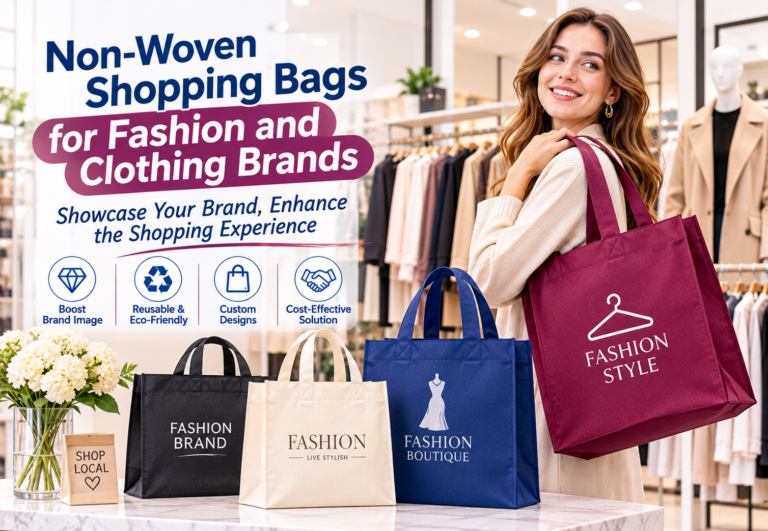
For fashion and clothing brands, custom non-woven shopping bags offer a practical and cost-effective way to package purchases while increasing brand visibility. They can be customized with different sizes, colors, logos, printing methods, and handle styles to match a brand’s visual identity.
Whether you operate a fashion boutique, clothing retail chain, online apparel business, or wholesale clothing brand, choosing the right shopping bag can help create a more consistent and professional brand experience.
In this guide, we’ll explore how fashion brands can use custom non-woven bags, what design options are available, and what buyers should consider before placing a bulk order.
1. Why Fashion Brands Choose Non-Woven Shopping Bags
Fashion retailers need packaging that looks attractive, supports daily shopping activities, and represents their brand effectively. Non-woven shopping bags offer several advantages.
Strong Brand Visibility
A shopping bag can become a mobile advertisement when customers carry it through shopping malls, streets, workplaces, and other public spaces.
Custom non-woven bags allow brands to display their logos, brand colors, slogans, and visual designs. Unlike plain packaging, a well-designed reusable bag can continue promoting a brand after the original purchase.
A Better Shopping Experience
Packaging is part of the customer’s overall shopping experience. A bag with suitable dimensions, comfortable handles, and a neat appearance makes it easier for customers to carry their purchases.
For fashion boutiques and premium clothing stores, coordinated bag designs can also create a more polished presentation at checkout.
Reusable and Practical
Many customers reuse shopping bags for everyday shopping, travel, storage, and carrying personal items.
Non-woven bags can be designed for repeated use, depending on fabric weight, construction, handle reinforcement, and how they are treated. This gives fashion brands another opportunity to maintain visibility beyond the store.
Cost-Effective for Bulk Orders
For brands that need packaging across multiple stores or seasonal campaigns, non-woven bags can be a practical bulk purchasing option.
Their material, size, printing, and construction can be adjusted to meet different budgets and requirements.
2. Popular Non-Woven Bag Styles for Fashion Retailers
Different fashion businesses have different packaging needs. A small boutique may prefer a compact, elegant shopping bag, while a large clothing retailer may need a more spacious and durable design.
Here are several popular options.
Flat Tote Bags
Flat tote bags are suitable for lightweight clothing, accessories, T-shirts, and promotional merchandise.
They offer a simple structure with a large printable surface, making them a practical choice for brands that want clear logo visibility.
Gusseted Shopping Bags
Side or bottom gussets provide additional capacity, allowing bags to accommodate folded clothing, jackets, shoes, and multiple purchases.
They are especially useful for fashion stores with a wider range of product sizes.
Box-Shaped Non-Woven Bags
Box-shaped bags have a structured appearance and a more defined bottom. They are suitable for clothing boutiques and retail brands that want packaging with a neat, organized presentation.
Foldable Shopping Bags
Foldable non-woven bags can be packed into a compact size when not in use. They are suitable for promotional campaigns, loyalty programs, and brands that want to encourage customers to reuse their shopping bags.
Reinforced Heavy-Duty Bags
For larger purchases or repeated everyday use, brands can consider reinforced bags with stronger handles and more substantial fabric.
The final carrying performance depends on the complete bag construction, not GSM alone.
3. How to Choose the Right Fabric Weight (GSM)
GSM refers to grams per square meter and indicates the weight of the non-woven fabric.
Choosing the right GSM helps balance appearance, durability, and purchasing cost.
| Fabric weight | Typical application |
|---|---|
| 70–80 GSM | Lightweight promotional and shopping bags |
| 90–100 GSM | General retail and clothing shopping bags |
| 110–120 GSM | More substantial bags for heavier purchases or repeated use |
For fashion retailers, 90–100 GSM can be a useful starting point for general shopping bags. Brands looking for a thicker feel or more substantial construction may consider 110–120 GSM.
However, a higher GSM does not automatically guarantee a specific load capacity. Fabric quality, bag dimensions, stitching, handle attachment, and reinforcement all affect performance.
Before ordering in bulk, buyers should request samples and test the finished bag under realistic shopping conditions.
4. Custom Printing Options for Fashion Brands
Printing is one of the most important elements of branded shopping bag design. The right printing method helps reproduce logos, colors, and artwork consistently.
Screen Printing
Screen printing is suitable for relatively simple designs, logos, and text. It is commonly used for solid-color graphics and can be a practical option for larger production quantities.
Heat Transfer Printing
Heat transfer printing can reproduce more detailed artwork and colorful designs. It is useful for fashion brands with more complex visual elements or specific color requirements.
Laminated Printing
Laminated non-woven bags can feature printed designs on a laminated surface, including matte or glossy finishes.
This option is suitable for brands that want more extensive graphic coverage, vibrant colors, and a more finished appearance.
The best method depends on the artwork, bag material, quantity, budget, and desired finish. Buyers should confirm color requirements and approve a production sample before mass manufacturing.
5. Design Ideas That Match Different Fashion Brand Identities
A shopping bag should reflect the style and positioning of the brand. Instead of choosing a design based only on appearance, consider how it connects with the products and target customers.
Minimalist Fashion Brands
Minimalist clothing brands can use neutral colors such as black, white, beige, and gray.
A simple logo, clean typography, and uncluttered layout can create a refined appearance.
Luxury and Premium Boutiques
Premium boutiques may prefer deeper colors, carefully selected typography, matte finishes, and reinforced handles.
A restrained design can communicate a more sophisticated brand identity without requiring complicated graphics.
Youth and Streetwear Brands
Streetwear brands can experiment with bold colors, oversized logos, graphic illustrations, and distinctive typography.
Custom non-woven bags can become part of the brand’s promotional merchandise and seasonal collections.
Sustainable Fashion Brands
Brands that focus on responsible consumption may choose reusable shopping bags with clear messaging about reuse and durability.
However, environmental claims should be accurate. A reusable bag is not automatically environmentally friendly simply because it can be reused. Its actual impact depends on material sourcing, production, transportation, and how frequently customers use it.
6. Choosing the Right Bag Size for Clothing Products
Bag dimensions should match the products customers typically purchase.
A bag that is too small may not accommodate folded garments, while an unnecessarily large bag can increase material usage and shipping volume.
Consider these general design directions:
| Retail product | Suggested bag design |
|---|---|
| T-shirts and lightweight tops | Medium flat tote |
| Shirts and trousers | Medium gusseted bag |
| Sweaters and jackets | Large gusseted shopping bag |
| Shoes and accessories | Wide-bottom or box-shaped bag |
| Multiple clothing items | Large reinforced tote |
These are design recommendations rather than fixed standard dimensions. Actual measurements should be determined by the folded product size, quantity per bag, and required presentation.
A practical approach is to measure the largest typical purchase and create a sample based on the real products.
7. Important Factors When Ordering Custom Non-Woven Bags in Bulk
Before selecting a manufacturer, fashion brands and purchasing teams should confirm several important details.
1. Material and GSM
Decide whether the bags are intended for lightweight promotional use, everyday retail purchases, or repeated use.
2. Bag Dimensions
Provide the required width, height, gusset depth, and handle length. If possible, share product dimensions or sample bags for reference.
3. Printing Artwork
Prepare a high-resolution logo and confirm the brand’s color requirements. Vector files such as AI, EPS, or editable PDF are useful for production.
4. Construction
Confirm whether the bag should be sewn or heat-pressed. Discuss handle reinforcement, bottom construction, and other structural details.
5. Quantity and MOQ
Minimum order quantities vary depending on the production method, size, printing, and design.
As an indicative reference, sewn non-woven bags may start from around 500 pieces, while heat-pressed styles may require around 10,000 pieces. Actual MOQ should be confirmed with the manufacturer for each project.
6. Samples and Quality Inspection
Review samples before approving bulk production. Check dimensions, printing quality, color consistency, handle strength, stitching or bonding, and overall appearance.
7. Production and Delivery Schedule
For seasonal collections, store openings, promotional events, and product launches, confirm the production schedule and shipping arrangements in advance.
8. Why Work with a Professional Custom Non-Woven Bag Manufacturer?
For fashion brands ordering custom shopping bags in bulk, choosing the right supplier is just as important as choosing the design.
A professional manufacturer should be able to support the project from artwork confirmation to finished production.
Look for a supplier that offers:
- Multiple fabric weights and material options.
- Different bag structures, sizes, and handle styles.
- Flexible printing and finishing options.
- Sample development and design support.
- Clear production communication and quality inspection.
- Reliable bulk manufacturing and shipping arrangements.
Working directly with a manufacturer can also make it easier to discuss specifications, evaluate samples, and coordinate repeat orders for different stores or product collections.
At CXGIAE, we provide custom non-woven bags for businesses and brands, with options for different sizes, materials, printing methods, and bag constructions.
Explore our custom non-woven bags for business branding and wholesale supply to learn more about available customization options.
9. Frequently Asked Questions
Are non-woven shopping bags suitable for clothing brands?
Yes. They are suitable for fashion boutiques, clothing retailers, apparel distributors, and promotional campaigns. They can be customized with brand logos, colors, sizes, and different bag structures.
Can I customize the color and logo of non-woven shopping bags?
Yes. You can customize fabric colors, logo placement, printing designs, dimensions, and handle styles. Available options depend on the material and production method.
What GSM is suitable for fashion shopping bags?
For general clothing retail, 90–100 GSM is a useful starting point. For a thicker feel or more substantial construction, 110–120 GSM may be considered. The final choice should also account for bag structure and expected contents.
What is the MOQ for custom non-woven bags?
MOQ depends on the bag style and production method. As an indicative reference, sewn bags may start at around 500 pieces, while heat-pressed bags may require around 10,000 pieces. Contact the manufacturer to confirm the MOQ for your design.
Can I order different sizes for different clothing products?
Yes. Custom dimensions can be developed for different product categories, such as T-shirts, jackets, trousers, shoes, and accessories. Brands can also create several bag sizes for different store requirements.
How can I get a quotation for custom non-woven shopping bags?
Prepare your preferred bag size, GSM, material, printing artwork, construction type, and estimated quantity. Share these details with the manufacturer to receive a more accurate quotation.
Conclusion
Custom non-woven shopping bags are a practical packaging option for fashion and clothing brands looking to combine everyday functionality with brand presentation.
From minimalist boutique totes to large reinforced retail bags, the right combination of fabric weight, dimensions, printing, and construction can create packaging that supports both customer convenience and brand recognition.
If you are planning a new retail packaging project or sourcing shopping bags for multiple stores, explore our custom non-woven bag solutions and contact our team to discuss your requirements.
Looking for a custom non-woven shopping bag manufacturer? Share your design, specifications, and order quantity with us to get started.