
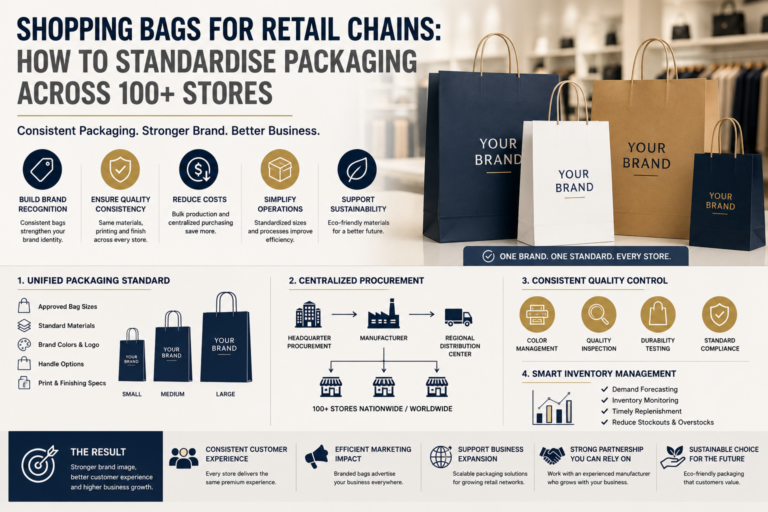

For retail chains with dozens or even hundreds of locations, packaging is much more than a shopping accessory. Every paper bag customers carry represents the brand in public, making consistency a critical part of the customer experience.
However, maintaining the same packaging standards across 100 or more stores is not always easy. Differences in ordering, inventory management, printing quality, and supplier performance can lead to inconsistent branding, higher costs, and operational inefficiencies.
The solution is a well-planned packaging standardization strategy. By creating unified specifications and working with a reliable manufacturing partner, retail chains can ensure every store delivers the same premium brand experience while improving purchasing efficiency.
This guide explains how large retailers can standardize custom shopping bags across multiple locations without sacrificing flexibility.
Why Standardized Packaging Matters
Customers expect a consistent shopping experience regardless of which store they visit.
Whether someone shops in New York, London, Sydney, or Singapore, the shopping bag should immediately communicate the same brand identity.
Standardized packaging helps businesses:
- Strengthen brand recognition
- Improve customer trust
- Simplify procurement
- Reduce operational costs
- Maintain consistent product quality
- Support nationwide or global marketing campaigns
Every shopping bag becomes a mobile advertisement that reinforces your brand.
The Challenges of Multi-Store Packaging
As retail networks grow, packaging management becomes increasingly complex.
Common challenges include:
- Different stores ordering different bag sizes
- Inconsistent logo colors
- Varying print quality
- Multiple suppliers using different materials
- Inventory shortages in high-volume locations
- Higher purchasing costs from fragmented orders
Without clear standards, even minor differences can weaken a brand’s professional image.
Build a Unified Packaging Standard
The first step is creating a packaging specification manual that every location follows.
A comprehensive standard should define:
Brand Identity
Maintain consistency in:
- Logo placement
- Brand colors
- Typography
- Graphic elements
- QR codes
- Marketing messages
Providing official artwork files helps eliminate printing inconsistencies.
Standard Bag Sizes
Instead of allowing every store to choose different dimensions, establish a limited range of standard sizes.
For example:
- Small for cosmetics and accessories
- Medium for apparel and gifts
- Large for home goods
- Extra-large for bulk purchases
Using standardized sizes simplifies production, warehousing, and replenishment.
Paper Materials
Specify approved materials for every product category.
Examples include:
- Kraft paper for eco-friendly collections
- White card paper for premium retail
- Coated paper for luxury campaigns
- Recycled paper for sustainability initiatives
Using consistent materials ensures every bag reflects the same level of quality.
Handle Types
Choose one or two approved handle styles throughout the retail network.
Common options include:
- Twisted paper handles
- Cotton rope handles
- Flat paper handles
- Ribbon handles for premium collections
Standardized handles improve both appearance and manufacturing efficiency.
Maintain Consistent Print Quality
Color consistency is essential for brand recognition.
Professional manufacturers use color management systems to ensure every production batch matches approved brand standards.
Quality control should include:
- Color verification
- Logo accuracy
- Print alignment
- Surface finishing inspection
- Material consistency
Routine inspections help maintain the same premium appearance across all stores.
Centralize Packaging Procurement
Instead of allowing each store to purchase packaging independently, centralize procurement through headquarters or a regional purchasing team.
Centralized purchasing offers several advantages:
- Better pricing through bulk orders
- Simplified supplier management
- Consistent product quality
- Reduced administrative workload
- More accurate inventory planning
Larger production runs also improve manufacturing efficiency and reduce unit costs.
Implement Regional Distribution
For retailers with stores across multiple regions or countries, regional distribution centers improve logistics efficiency.
A typical workflow includes:
- Manufacture shopping bags in bulk.
- Deliver products to regional warehouses.
- Distribute inventory to individual stores based on demand.
- Monitor stock levels using inventory management systems.
This approach minimizes emergency shipments while improving replenishment speed.
Forecast Demand Accurately
Packaging demand often varies by:
- Store size
- Sales volume
- Seasonal promotions
- Product launches
- Holiday campaigns
Analyzing historical sales data allows businesses to forecast future packaging requirements more accurately.
Better forecasting reduces both stock shortages and excess inventory.
Introduce Seasonal Packaging Without Losing Consistency
Retailers frequently launch limited-edition packaging for holidays and promotional events.
To maintain brand consistency:
- Keep the same bag structure.
- Use consistent logo placement.
- Preserve brand typography.
- Introduce seasonal colors or graphics only where appropriate.
This creates excitement while ensuring customers still recognize the brand immediately.
Prioritize Sustainable Packaging
Consumers increasingly expect retailers to adopt environmentally responsible packaging.
Many retail chains now standardize sustainable materials such as:
- FSC-certified paper
- Recycled kraft paper
- Water-based inks
- Plastic-free handles
- Recyclable packaging
A unified sustainability strategy strengthens brand reputation and supports corporate ESG goals.
Choose a Reliable Packaging Manufacturing Partner
Managing packaging for more than 100 stores requires a supplier capable of supporting long-term growth.
Look for a manufacturer that offers:
- Large-scale production capacity
- Stable quality control
- Global export experience
- Flexible customization
- Inventory planning support
- Consistent lead times
- Professional design assistance
A reliable manufacturing partner becomes an extension of your supply chain rather than simply a vendor.
Best Practices for Multi-Store Packaging Standardization
To achieve long-term success:
- Create a detailed packaging specification manual.
- Limit the number of bag sizes and materials.
- Centralize purchasing decisions.
- Standardize artwork and color management.
- Forecast demand using sales data.
- Work with one experienced manufacturing partner.
- Review packaging performance regularly and update standards when necessary.
These practices improve efficiency while ensuring a consistent customer experience across every store.
Conclusion
For retail chains operating 100 or more stores, standardized shopping bags are a strategic investment rather than a simple operational necessity.
By unifying materials, sizes, printing standards, procurement processes, and logistics planning, businesses can strengthen their brand identity, reduce costs, and deliver a consistent shopping experience at every location.
Whether you’re expanding a national retail network or managing an international chain, a well-designed packaging standard helps your brand remain recognizable, professional, and memorable wherever customers shop.
Looking for a trusted manufacturer to supply custom shopping bags for large retail chains? We provide factory-direct production, premium printing, flexible customization, and reliable global delivery to help businesses standardize packaging across every store.