
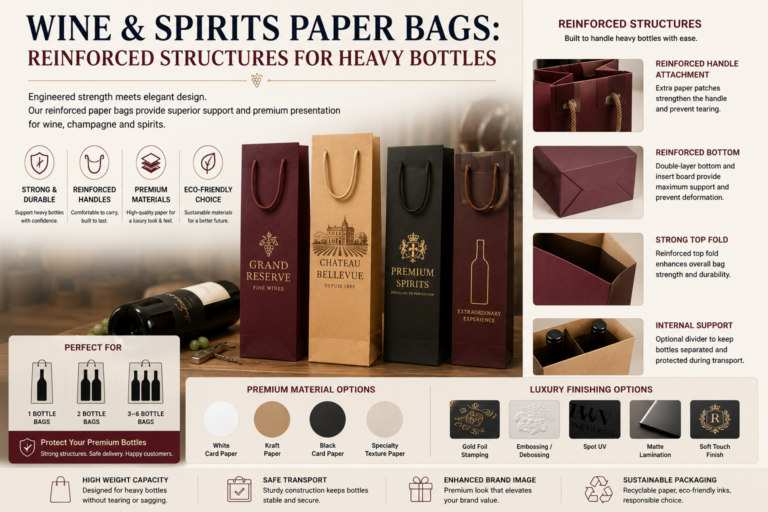

The wine and spirits industry relies heavily on premium packaging to communicate quality, craftsmanship, and brand value. While the bottle itself is often the centerpiece, the paper bag that carries it plays an equally important role in protecting the product and enhancing the customer’s experience.
Unlike standard retail bags, wine and spirits paper bags must support significant weight while maintaining an elegant appearance. Poor structural design can result in torn handles, collapsed bottoms, or damaged bottles, leading to customer dissatisfaction and unnecessary costs.
This guide explores how reinforced paper bag structures provide the strength, durability, and premium presentation required for wine and spirits packaging.
Why Strength Matters in Wine Bottle Packaging
A standard 750 ml glass wine bottle typically weighs between 1.2 and 1.8 kg when filled, while champagne, sparkling wine, and premium spirits can weigh even more.
When customers purchase multiple bottles, the load on the paper bag increases dramatically.
A high-quality wine bag should provide:
- Reliable weight-bearing capacity
- Comfortable carrying experience
- Premium presentation
- Protection during transportation
- Long-lasting durability
Structural engineering is just as important as attractive printing.
Choosing the Right Paper Material
The strength of a wine paper bag starts with the paper itself.
Common materials include:
White Card Paper
White card paper offers excellent stiffness and a smooth surface for premium printing. It is ideal for luxury wine brands that require vibrant colors, embossing, or foil stamping.
Kraft Paper
Natural kraft paper combines durability with an eco-friendly appearance. It is widely used for wineries, organic wine brands, and craft distilleries.
Laminated Paper
Laminated paper improves moisture resistance and surface durability while providing either a glossy or matte luxury finish.
The ideal paper weight typically ranges from 190–250 GSM, depending on the bottle weight and bag dimensions.
Reinforced Bottom Construction
The bottom of the bag carries most of the load.
Without proper reinforcement, heavy bottles may cause the base to deform or split.
Common reinforcement methods include:
Double-Layer Bottom Panels
An additional paperboard layer significantly increases weight-bearing capacity without noticeably affecting appearance.
Folded Lock-Bottom Structure
Interlocking folds distribute pressure more evenly across the base, improving overall stability.
Reinforced Cardboard Inserts
Premium wine bags often include thick cardboard inserts that prevent the bottom from bending under heavy loads.
These structures allow the bag to safely transport one or multiple bottles.
Stronger Handle Options
Handles experience the highest pulling force during use.
Selecting the correct handle is essential for safety and customer confidence.
Cotton Rope Handles
Soft, durable, and comfortable to carry, cotton rope handles are commonly used for premium wine packaging.
Polyester Rope Handles
These provide excellent tensile strength while maintaining an elegant appearance.
Twisted Paper Handles
Suitable for lighter wine bags and environmentally friendly packaging projects.
Ribbon Handles
Often used for luxury gift packaging where presentation is prioritized over heavy carrying capacity.
Handle attachment points should also be reinforced with additional patches or eyelets to prevent tearing.
Internal Reinforcement Improves Durability
Beyond the exterior, internal structural elements play a crucial role in supporting heavy bottles.
Manufacturers often incorporate:
- Reinforced top folds
- Double-layer side panels
- Internal cardboard supports
- Bottom reinforcement boards
- Strengthened adhesive joints
These hidden features dramatically improve the bag’s load-bearing performance while maintaining a clean exterior.
Designing for Single and Multiple Bottles
Different bottle quantities require different structural designs.
Single Bottle Bags
Designed with narrow dimensions to reduce bottle movement and improve carrying stability.
Ideal for:
- Retail wine stores
- Gift shops
- Winery tasting rooms
Two-Bottle Bags
Usually feature a reinforced divider that prevents bottles from colliding during transportation.
Benefits include:
- Better bottle protection
- Improved balance
- Enhanced customer safety
Multi-Bottle Bags
For three to six bottles, stronger paperboard, wider bases, and reinforced handles become essential.
Some designs also include removable internal dividers for added flexibility.
Premium Finishes for Luxury Branding
Wine packaging often serves as an extension of the brand.
Popular finishing options include:
- Hot foil stamping
- Embossed logos
- Debossing
- Spot UV coating
- Matte lamination
- Soft-touch finishes
- Textured specialty papers
These finishing techniques create a premium look while reinforcing brand recognition.
Sustainability Is Becoming a Competitive Advantage
Consumers increasingly expect environmentally responsible packaging.
Many wineries and spirits brands now choose:
- FSC-certified paper
- Recycled kraft paper
- Water-based inks
- Plastic-free handles
- Recyclable reinforcement materials
Strong, reusable paper bags also encourage customers to reuse them for gifts or storage, extending brand exposure beyond the initial purchase.
Testing Matters Before Mass Production
Before large-scale production, manufacturers should perform quality tests to ensure structural reliability.
Typical tests include:
- Static load testing
- Handle pull testing
- Bottom compression testing
- Drop testing
- Moisture resistance evaluation
Testing helps identify potential weaknesses and ensures every bag meets the required performance standards.
How to Choose the Right Manufacturer
A professional packaging manufacturer should offer more than custom printing.
Look for a supplier that provides:
- Structural design recommendations
- Material selection guidance
- Load-bearing testing
- Custom size development
- Premium finishing options
- Consistent quality control
- Global export experience
Working directly with an experienced factory helps ensure your wine packaging is both visually impressive and structurally reliable.
Conclusion
Wine and spirits paper bags must do more than look elegant. They need to safely support heavy glass bottles while delivering a premium brand experience.
By combining high-quality materials, reinforced bottoms, durable handles, and carefully engineered structures, businesses can create packaging that protects valuable products and leaves a lasting impression on customers.
Whether you’re a winery, distillery, retailer, or distributor, investing in reinforced custom paper bags enhances product presentation, improves customer confidence, and reduces the risk of packaging failures.
Looking for custom wine and spirits paper bags with superior strength and premium finishes? Contact us today for a free consultation and discover tailored packaging solutions designed for your brand.