
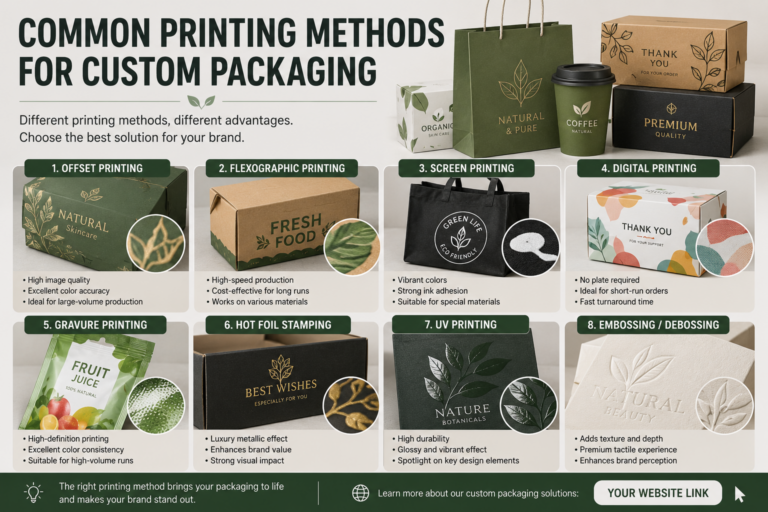

Custom packaging is more than just a container for products. It serves as a powerful branding tool that influences customer perception, purchasing decisions, and overall brand recognition.
Whether it’s a paper bag, gift box, non-woven bag, paper cup, or food packaging, the printing method plays a crucial role in determining the final appearance, durability, and production cost of the packaging.
Different printing technologies offer different advantages. Understanding these options can help businesses choose the most suitable solution for their packaging projects.
In this article, we’ll explore the most common printing methods used in custom packaging and how to select the right one for your brand.
Why Printing Method Matters
The quality of printing directly affects how customers perceive a product.
A well-printed package can:
- Enhance brand recognition
- Improve product presentation
- Increase perceived value
- Create a professional image
- Strengthen customer trust
According to information published by the Printing Industries of America (printing.org), print quality and color consistency are important factors in maintaining strong brand identity across packaging and marketing materials.
Choosing the correct printing process ensures that your packaging meets both aesthetic and functional requirements.
Offset Printing
Offset printing is one of the most widely used printing methods in the packaging industry.
It transfers ink from a metal plate to a rubber blanket and then onto the printing surface.
Advantages
- High image quality
- Excellent color accuracy
- Suitable for large-volume production
- Cost-effective for bulk orders
- Supports detailed artwork
Common Applications
- Paper bags
- Gift boxes
- Folding cartons
- Product packaging
Offset printing is often the preferred choice for retail and luxury packaging because it delivers sharp images and professional color reproduction.
Flexographic Printing
Flexographic printing, commonly called flexo printing, uses flexible relief plates and fast-drying inks.
This method is especially popular for large-scale packaging production.
Advantages
- High-speed production
- Suitable for long print runs
- Works on various materials
- Lower production cost for large quantities
Common Applications
- Food packaging
- Corrugated boxes
- Paper bags
- Labels
- Flexible packaging
Many takeaway and retail paper bags are produced using flexographic printing because it balances efficiency and cost-effectiveness.
Screen Printing
Screen printing pushes ink through a mesh screen onto the packaging surface.
Although slower than offset printing, it offers excellent ink coverage and durability.
Advantages
- Vibrant colors
- Strong ink adhesion
- Suitable for special materials
- Cost-effective for simple designs
Common Applications
- Non-woven bags
- Canvas bags
- Promotional packaging
- PVC bags
Screen printing is particularly popular for custom logo printing on reusable shopping bags and promotional products.
Digital Printing
Digital printing has become increasingly popular due to advancements in printing technology.
Unlike traditional printing methods, digital printing does not require printing plates.
Advantages
- Fast setup
- Ideal for small orders
- Variable data printing
- Quick turnaround times
- Reduced preparation costs
Common Applications
- Sample production
- Short-run packaging
- Personalized packaging
- Seasonal promotions
Digital printing is an excellent option for businesses testing new packaging designs before committing to large production volumes.
Gravure Printing
Gravure printing uses engraved cylinders to transfer ink onto materials.
It is known for exceptional image quality and consistency.
Advantages
- High-definition image reproduction
- Excellent color consistency
- Suitable for very large production runs
- Long-lasting print quality
Common Applications
- Flexible packaging
- Food wrappers
- Plastic packaging
- Laminated packaging materials
Because gravure printing requires expensive cylinder preparation, it is usually reserved for high-volume packaging projects.
Hot Foil Stamping
Hot foil stamping is not a primary printing method but a decorative finishing technique.
A metallic foil is transferred onto the packaging surface using heat and pressure.
Advantages
- Luxury appearance
- Premium branding effect
- Strong visual impact
- Excellent logo enhancement
Common Applications
- Luxury paper bags
- Gift boxes
- Cosmetic packaging
- Jewelry packaging
Gold and silver foil stamping are particularly popular among premium brands looking to create a sophisticated presentation.
UV Printing
UV printing uses ultraviolet light to instantly cure the ink after application.
This creates a durable and visually striking finish.
Advantages
- High durability
- Scratch resistance
- Glossy effect
- Excellent color vibrancy
Common Applications
- Premium packaging
- Promotional packaging
- Luxury retail packaging
Spot UV is often used to highlight logos or specific design elements and create a high-end appearance.
Embossing and Debossing
Embossing raises selected design elements above the surface, while debossing presses them into the material.
These techniques add texture and depth to packaging.
Advantages
- Premium tactile experience
- Enhanced brand visibility
- Luxury appearance
- Memorable customer experience
Common Applications
- Luxury shopping bags
- Gift boxes
- Corporate packaging
Many luxury brands combine embossing with foil stamping to create distinctive packaging designs.
How to Choose the Right Printing Method
Selecting the best printing method depends on several factors:
Order Quantity
- Large orders: Offset or flexographic printing
- Small orders: Digital printing
Packaging Material
- Paper bags: Offset or flexographic printing
- Non-woven bags: Screen printing
- Flexible packaging: Gravure printing
Budget
- Screen printing offers affordable customization
- Digital printing reduces setup costs for small quantities
- Offset printing becomes more economical at higher volumes
Branding Requirements
Premium brands often choose combinations of:
- Offset printing
- Foil stamping
- Embossing
- Spot UV finishing
These techniques help create packaging that stands out in competitive markets.
Custom Packaging Is More Than Printing
While printing is essential, successful packaging also depends on:
- Material quality
- Structural design
- Finishing options
- Sustainability considerations
- User experience
Businesses increasingly combine high-quality printing with eco-friendly materials to meet modern consumer expectations.
If you’re looking for custom paper bags, gift boxes, non-woven bags, paper cups, or other packaging solutions, choosing the right printing method can significantly improve both brand image and customer satisfaction.
Final Thoughts
There is no single “best” printing method for custom packaging.
Each technique offers unique advantages depending on the material, design complexity, production volume, and branding goals.
From cost-effective flexographic printing to premium foil stamping and embossing, understanding these options allows businesses to create packaging that not only protects products but also strengthens brand identity.
The right packaging doesn’t just carry a product.
It tells a story about the brand behind it.