
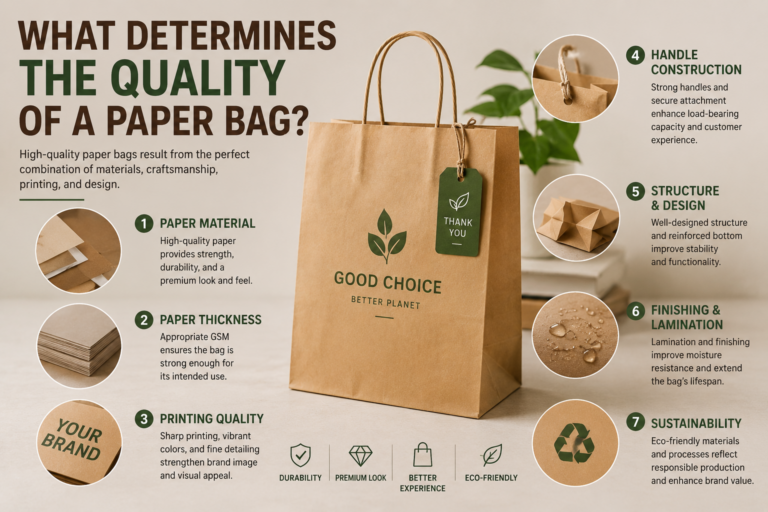

Paper bags may appear simple at first glance, but producing a high-quality paper bag involves far more than folding paper and adding handles.
In retail stores, cafés, bakeries, fashion boutiques, takeaway restaurants, and luxury gift shops, paper bags are part of the customer experience. A poorly made bag can tear easily, lose shape, leak, or create a negative impression of the brand itself.
For businesses using custom packaging, paper bag quality directly affects:
- Brand image
- Customer satisfaction
- Product protection
- Packaging durability
- Printing presentation
- Sustainability perception
So what actually determines whether a paper bag feels cheap or premium?
The answer comes down to several important factors, including material selection, structure, printing quality, handle construction, manufacturing precision, and intended usage.
Paper Material Is the Foundation
The most important factor affecting paper bag quality is the paper material itself.
Different paper materials create completely different textures, strength levels, and visual effects.
Common paper bag materials include:
- Kraft paper
- White card paper
- Coated paper
- Art paper
- Specialty textured paper
Kraft paper is widely used because it provides strong durability and a natural eco-friendly appearance. White card paper is often preferred for luxury retail packaging because it supports cleaner printing and sharper colors.
According to packaging discussions published by the Fibre Box Association, paper strength and structural performance are critical for packaging reliability and transportation durability.
Higher-quality paper materials generally provide:
- Better load-bearing capacity
- Stronger tear resistance
- Cleaner printing surfaces
- Improved stiffness
- More premium tactile feel
The wrong material choice can cause bags to wrinkle, deform, or fail during use.
Paper Thickness Affects Strength and Appearance
Paper thickness, often measured in GSM (grams per square meter), plays a major role in overall bag quality.
Thicker paper usually creates:
- Better structural support
- Stronger carrying performance
- More premium appearance
- Improved durability
However, thicker is not always better.
A luxury gift bag may require thick structured paper for presentation, while takeaway bags need a balance between flexibility and strength.
Using excessive thickness can increase costs unnecessarily and make bags less practical for folding and transportation.
Professional packaging manufacturers choose paper thickness based on:
- Product weight
- Usage environment
- Printing requirements
- Handle design
- Customer budget
Handle Construction Matters More Than Many Realize
One of the most common customer complaints about paper bags is handle failure.
Even if the paper itself is strong, weak handles can ruin the entire packaging experience.
High-quality paper bags often use:
- Twisted paper handles
- Cotton rope handles
- Ribbon handles
- Flat handles
- Reinforced die-cut handles
The handle attachment method is equally important.
Premium bags usually include reinforced internal patches or stronger adhesive bonding systems to improve load-bearing performance.
Luxury brands especially focus on handle feel because customers subconsciously associate handle quality with overall product value.
A soft cotton rope handle instantly creates a more premium experience than a thin glued handle.
Printing Quality Influences Brand Perception
For custom paper bags, printing quality is extremely important.
Customers often judge packaging quality visually before touching the bag itself.
Poor printing may include:
- Blurry logos
- Uneven colors
- Misaligned graphics
- Faded ink
- Weak finishing effects
High-quality printing creates:
- Sharp brand presentation
- Better color consistency
- Premium visual impact
- Stronger shelf appeal
Modern paper bag production may include:
- Offset printing
- Screen printing
- UV printing
- Foil stamping
- Embossing
- Matte or glossy lamination
According to information from the Printing Industries of America, print consistency and color accuracy strongly affect perceived packaging professionalism.
For luxury and retail brands, packaging appearance often directly influences customer perception of product value.
Bag Structure and Design Affect Performance
Good paper bag quality is not only about materials.
Structural design also determines how well the bag performs in real-world usage.
Important design factors include:
- Bottom reinforcement
- Side gusset structure
- Folding precision
- Weight distribution
- Handle positioning
A poorly balanced bag may collapse, lean, or tear under pressure.
Takeaway packaging especially requires strong bottom structures because food containers create concentrated weight points.
Retail shopping bags often prioritize presentation and carrying comfort.
Different industries require different structural solutions.
Manufacturing Precision Makes a Big Difference
Even with good materials, poor production processes can lower quality dramatically.
High-quality paper bag manufacturing requires precision in:
- Cutting
- Folding
- Gluing
- Handle installation
- Printing alignment
- Edge finishing
Small production mistakes can create:
- Uneven bag shapes
- Weak adhesive areas
- Wrinkled surfaces
- Poor folding lines
- Reduced durability
Experienced factories usually implement stricter quality inspection systems to ensure consistency during mass production.
This becomes especially important for global brands that require stable packaging standards across large orders.
👉 Looking for high-quality custom paper bags for retail, food, gift, or takeaway packaging?
Explore our packaging solutions here:Custom Paper Bags for Retail, Food, Gift & Takeaway Packaging
Lamination and Finishing Influence Durability
Surface finishing can significantly affect both appearance and durability.
Many premium paper bags use:
- Matte lamination
- Gloss lamination
- Soft-touch coating
- UV spot finishing
- Waterproof coating
These finishes help improve:
- Moisture resistance
- Scratch resistance
- Visual luxury
- Color protection
For food takeaway packaging, moisture resistance is especially important because steam, oil, and condensation can weaken paper quickly.
Luxury brands often use finishing techniques to create a more refined tactile experience.
Sustainability Is Becoming Part of Quality
Modern consumers increasingly associate packaging quality with environmental responsibility.
Today, high-quality paper bags are often expected to include:
- Recyclable materials
- FSC-certified paper
- Eco-friendly inks
- Reduced plastic components
- Reusable structures
According to sustainability discussions published by the Forest Stewardship Council (FSC), responsibly sourced paper materials are becoming increasingly important in modern packaging supply chains.
For many brands, sustainable packaging now improves both environmental image and customer trust.
Different Industries Require Different Quality Standards
Not every paper bag needs the same level of performance.
For example:
Luxury retail bags focus on:
- Appearance
- Texture
- Premium finishing
- Brand presentation
Takeaway bags focus on:
- Strength
- Oil resistance
- Moisture protection
- Carrying stability
Promotional bags focus on:
- Cost efficiency
- Brand visibility
- Bulk production
A good packaging supplier understands these differences and adjusts materials and production methods accordingly.
Final Thoughts
The quality of a paper bag is determined by far more than appearance alone.
Material selection, paper thickness, handle construction, printing quality, manufacturing precision, structural design, and finishing details all work together to create packaging that feels reliable and professional.
High-quality paper bags do more than carry products.
They help businesses communicate:
- Brand value
- Professionalism
- Customer care
- Sustainability
- Product quality
In modern retail and food industries, packaging has become part of the product experience itself.
And sometimes, customers judge the quality of the brand long before they even open the bag. ✨