
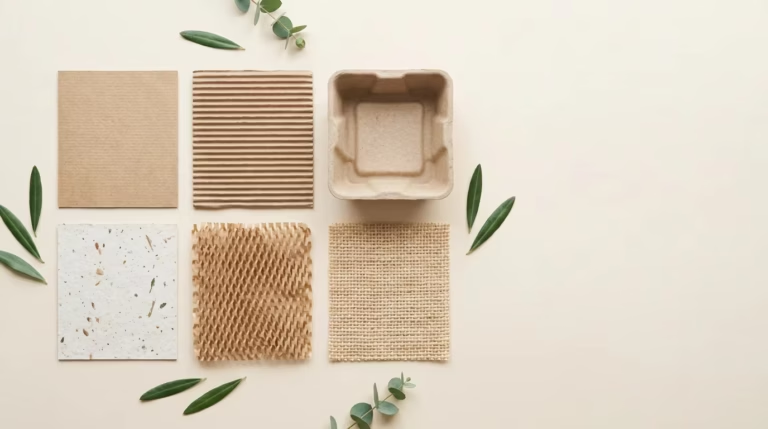

Choosing the right packaging material is one of the most impactful sustainability decisions a brand can make. It affects your carbon footprint, your costs, your compliance with regulations, and how customers perceive your brand. But with so many “eco-friendly” options on the market, it’s easy to get lost in the terminology.
This guide breaks down the most common eco-friendly packaging materials — what they are, their pros and cons, and which products they suit best — so you can make a confident, informed choice for your brand.
First: Understand the Three Key Terms
Before comparing materials, it helps to understand three labels that are often confused:
- Recyclable — Can be processed and remade into new products through existing recycling streams (e.g., paper, cardboard).
- Biodegradable — Breaks down naturally over time, though the timeframe and conditions vary widely.
- Compostable — Breaks down into nutrient-rich compost under specific conditions (home or industrial composting).
A material can be one, two, or all three. The “best” choice depends on your product, your market, and how customers are likely to dispose of the packaging. For most paper-based packaging, recycling is typically the better environmental choice because it keeps materials in use through multiple cycles.
The Main Eco-Friendly Packaging Materials
1. Kraft Paper
Kraft paper is one of the most popular and versatile eco materials — and often the most cost-effective. Made from wood pulp, it’s strong, recyclable, biodegradable, and instantly recognizable as “eco” to consumers.
- Best for: Bags, wraps, mailers, labels, void fill
- Pros: Affordable, recyclable, biodegradable, strong, prints well
- Cons: Less moisture-resistant than coated options
- Tip: Choose FSC-certified kraft paper to guarantee it comes from responsibly managed forests — it’s the most popular eco material for exactly this reason.
2. Corrugated Cardboard
The workhorse of shipping. Corrugated board is durable, lightweight, highly recyclable, and frequently made from a high percentage of post-consumer recycled (PCR) content — often 70–100%.
- Best for: Shipping boxes, mailers, protective outer packaging
- Pros: Strong, protective, highly recyclable, reusable, cost-effective at scale
- Cons: Bulkier to store flat-packed
- Why it works: It’s durable, customizable, and one of the easiest materials to recycle — ideal for e-commerce.
3. Molded Pulp (Molded Fiber)
Made from recycled paper or agricultural waste, molded pulp is shaped into custom forms for protection. Think egg cartons, electronics trays, and cushioning inserts.
- Best for: Protective inserts, trays, cushioning for fragile items
- Pros: Recyclable, compostable, made from waste, replaces plastic/foam
- Cons: Less precise finish than plastic; tooling cost for custom molds
- Why it matters: It’s a leading plastic-foam replacement and decomposes naturally.
4. Recycled Paper & Paperboard
Recycled paper uses post-consumer waste instead of virgin fiber, dramatically lowering environmental impact. Virgin tree paper is significantly more carbon-emitting, polluting, and resource-intensive than recycled paper.
- Best for: Folding cartons, product boxes, inserts, printed materials
- Pros: Lower footprint than virgin paper, recyclable, widely available
- Cons: Slightly less bright/smooth than virgin stock (often a non-issue)
5. Paper-Based Cushioning & Void Fill
Replacing plastic bubble wrap and foam peanuts, paper-based protective options like honeycomb paper wrap and crinkle paper offer cushioning that’s fully recyclable.
- Best for: Protecting products in transit, premium unboxing
- Pros: Recyclable, biodegradable, plastic-free, great unboxing feel
- Cons: May need more material for very fragile, heavy items
6. Compostable Bioplastics (PLA & PBAT)
For applications that genuinely need a film or plastic-like material, bioplastics such as PLA (from plant starch) and PBAT offer clarity and flexibility while being compostable.
- Best for: Films, flexible pouches, windows, food-contact applications
- Pros: Plastic-like performance, plant-based, compostable
- Cons: Often require industrial composting (not home or curbside recycling); can contaminate plastic recycling streams if mixed
- Caution: Communicate disposal clearly — bioplastics only deliver their benefit when composted correctly.
7. Emerging Materials: Mushroom (Mycelium) & Seaweed
Newer materials are gaining attention. Mycelium (mushroom) packaging grows into custom protective shapes and is home-compostable; seaweed-based films are emerging for food applications.
- Best for: Premium/niche protective packaging, brands wanting a strong sustainability story
- Pros: Renewable, home-compostable, innovative brand angle
- Cons: Higher cost, limited availability, less proven at large scale
Quick Comparison
How to Choose the Right Material
There’s no single “best” material — the right choice balances four factors:
- Product needs. Fragile, heavy, or moisture-sensitive products need more protection; lightweight goods can use simpler materials.
- Disposal reality. Choose materials your customers can actually recycle or compost where they live. Recyclable paper-based options are the safest default for most markets.
- Compliance. If you sell into the EU or other regulated markets, prioritize recyclable, mono-material designs to meet tightening rules.
- Cost and brand image. Kraft and corrugated deliver eco credibility affordably; premium materials like mycelium offer a standout story at higher cost.
For most brands, FSC-certified paper, recycled corrugated, and molded pulp offer the best balance of sustainability, performance, and cost — which is why they dominate eco-friendly packaging today.
The Bottom Line
Eco-friendly packaging isn’t about chasing the trendiest material — it’s about choosing the right one for your product, your customers, and your market. Paper-based, recyclable materials remain the backbone of sustainable packaging because they’re affordable, widely recyclable, and trusted by consumers. From there, you can layer in compostable or innovative materials where they add real value.
If you’re ready to switch to custom, eco-friendly packaging built from the right materials for your brand, explore our custom packaging options — we help brands choose and produce sustainable packaging at scale.
Need help selecting the best eco-friendly materials for your products? We manufacture custom, sustainable packaging for brands, retailers, and importers worldwide. Get a free quote today.