
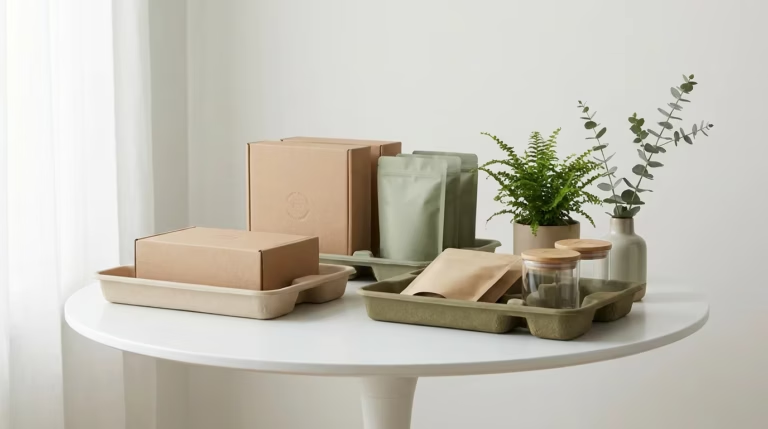

Sustainable packaging has moved from a marketing talking point to a business requirement. In 2026, regulations are tightening, materials are evolving fast, and consumers are scrutinizing packaging more than ever. For brands, retailers, and importers, keeping up isn’t optional — it’s a matter of staying competitive and compliant.
Here are the key sustainable packaging trends shaping 2026, and what each one means for your brand.
1. Regulation Is Now the Driving Force
The biggest shift in 2026 isn’t a material — it’s policy. The EU’s Packaging and Packaging Waste Regulation (PPWR) entered into force in February 2025 and generally applies from 12 August 2026, setting binding rules across the entire European market.
What it means in practice:
- All packaging must be designed for recyclability by 2030, with poorly recyclable formats being phased out.
- Minimum recycled content requirements for plastic packaging are coming into effect over the next several years.
- Extended Producer Responsibility (EPR) and waste-reduction targets are expanding.
Even if you’re not based in the EU, this matters: if you sell into European markets — or work with partners who do — your packaging needs to meet these standards. Regulation is now the single most important force shaping packaging decisions, and brands that align early will avoid costly, rushed transitions later.
2. Design for Recyclability and Mono-Materials
As “designed for recycling” becomes the legal baseline, brands are simplifying their packaging. Mono-materials — packaging made from a single material rather than mixed laminates — are gaining ground because they’re far easier to recycle in existing waste streams.
This is pushing a shift away from hard-to-recycle multi-layer plastics toward:
- Corrugated board and paper-based structures
- Molded fiber for cushioning and trays
- Paper-based void fill and honeycomb wrap replacing plastic bubble wrap
For brands, the lesson is clear: the simpler and more uniform your packaging materials, the easier it is to meet recyclability requirements — and the better your sustainability story.
3. Fiber-Based Materials Keep Replacing Plastic
The move from plastic to paper and fiber continues to accelerate in 2026. “Recyclable” remains one of the top environmental claims on new product launches, signaling where the market is heading.
Brands are increasingly choosing:
- Recycled and FSC-certified kraft paper for boxes, mailers, and bags
- Molded pulp for protective inserts and electronics packaging
- Paper-based cushioning in place of foam and plastic
Fiber-based packaging hits the sweet spot: it’s renewable, widely recyclable, and consumers instantly recognize it as eco-friendly.
4. Reuse, Refill, and Circular Systems
Recycling is no longer the end goal — circularity is. In 2026, more brands are exploring reusable and refillable packaging systems that keep materials in use longer rather than discarding them after a single trip.
Examples gaining traction:
- Refillable containers for beauty, home, and food products
- Returnable and reusable shipping packaging for e-commerce
- “Regenerative” and upcycled packaging that gives waste a second life
While not every product fits a refill model, the broader message is that brands are being rewarded for thinking beyond single use.
5. Lightweighting and Right-Sizing
Using less material is one of the simplest and most cost-effective sustainability moves — and it’s a major 2026 priority. Lightweighting (reducing material weight) and right-sizing (eliminating excess box space) cut both environmental impact and shipping costs at the same time.
For e-commerce brands especially, right-sized packaging means:
- Lower material and shipping costs
- Less waste and a smaller carbon footprint
- A better unboxing experience without wasteful empty space
This is the rare sustainability win that also directly improves your margins.
6. Consumers Expect Proof, Not Buzzwords
Shoppers in 2026 are more informed — and more skeptical of vague “green” claims. Generic terms like “eco-friendly” no longer cut it. Consumers want clear, specific, and honest information: what the material is, how to recycle it, and what the brand is actually doing.
To build trust, brands should:
- Use clear recycling labels and disposal instructions
- Make specific, verifiable claims (e.g., “made with 80% recycled paper”) instead of vague slogans
- Avoid greenwashing, which increasingly carries reputational and regulatory risk
Transparency is now part of the product itself.
What Brands Should Do in 2026
Pulling it together, here’s how to stay ahead this year:
- Audit for compliance. Check whether your packaging meets recyclability and recycled-content rules — especially if you sell into the EU.
- Simplify your materials. Move toward mono-materials and fiber-based options that are easy to recycle.
- Right-size everything. Cut excess material to save money and reduce waste.
- Communicate clearly. Back up sustainability claims with specific, honest labeling.
- Partner with the right manufacturer. Work with a supplier who understands these trends and can deliver compliant, custom, eco-friendly packaging at scale.
The Bottom Line
In 2026, sustainable packaging is being driven by regulation, smarter materials, and more demanding consumers all at once. The brands that thrive will be the ones that treat sustainability not as a checkbox, but as a design principle — building it into materials, sizing, and messaging from the start.
If you’re ready to upgrade to custom, compliant, eco-friendly packaging that keeps your brand ahead of the curve, explore our custom packaging options — designed for brands that take sustainability seriously.
Looking for a manufacturer who can help you navigate 2026’s packaging trends? We produce custom, eco-friendly packaging for brands, retailers, and importers worldwide. Get a free quote today.