
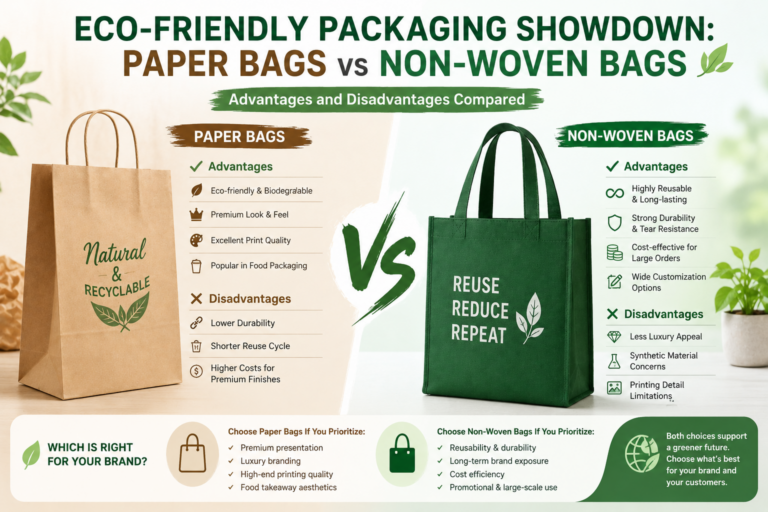

In today’s packaging industry, businesses face increasing pressure to balance sustainability, branding, durability, and cost-effectiveness. Consumers are paying closer attention to packaging choices than ever before. A bag is no longer just something used to carry products. It has become part of the customer experience, a reflection of brand values, and sometimes even a marketing tool that travels far beyond the checkout counter.
Among the most popular eco-friendly alternatives to traditional plastic packaging, paper bags and non-woven bags dominate the conversation. Both offer environmental and branding benefits, yet each comes with unique strengths and limitations.
So which packaging solution is better for your business?
The answer depends on your industry, customer expectations, budget, and sustainability goals.
Why Eco-Friendly Packaging Matters
Modern consumers increasingly prefer brands that demonstrate environmental responsibility. Packaging now influences:
- Customer trust
- Brand perception
- Social media visibility
- Repeat purchases
- Corporate sustainability image
Businesses that continue relying heavily on disposable plastic packaging may appear outdated in a market moving rapidly toward greener alternatives.
Eco-friendly packaging has become more than a trend. It is now part of modern brand identity.
Understanding Paper Bags
Paper bags are commonly produced using kraft paper, white cardboard paper, coated paper, or specialty paper materials. They are widely used in retail, food service, luxury shopping, and gift packaging.
Many brands choose paper bags because they create a clean, natural, and premium visual impression.
👉 Explore custom paper bag solutions here:
Custom Paper Bags Landing Page
Advantages of Paper Bags
1. Strong Eco-Friendly Perception
Paper bags are biodegradable and recyclable, which makes them highly attractive to environmentally conscious consumers.
Their natural texture and earthy appearance immediately communicate sustainability.
For many customers, a kraft paper bag feels environmentally safer than synthetic packaging, even before they read a single brand message printed on it.
2. Premium Brand Appearance
Paper bags often provide a more upscale and elegant presentation compared with many reusable shopping bags.
Luxury retailers frequently use paper packaging because it supports:
- High-end branding
- Elegant product presentation
- Sophisticated customer experience
- Premium printing finishes
Embossing, foil stamping, UV coating, and textured paper effects can transform a simple shopping bag into part of the product experience itself.
A beautifully designed paper bag behaves almost like silent retail theater carried through the streets.
3. Excellent Printing Quality
Paper surfaces support sharp graphics, vivid colors, and highly detailed designs.
This makes paper bags especially suitable for:
- Fashion brands
- Cosmetic packaging
- Boutique stores
- Gift shops
- Café takeaway packaging
4. Popular in Food Packaging
Restaurants, bakeries, cafés, and takeaway businesses widely use paper bags because they align naturally with modern “green dining” trends.
Food-safe kraft paper packaging also creates a more natural and organic brand image.
Disadvantages of Paper Bags
Despite their popularity, paper bags also have several practical limitations.
1. Limited Durability
Paper bags are generally more vulnerable to:
- Moisture
- Heavy weight
- Tearing
- Long-term wear
Rainy weather and overloaded contents can quickly damage the bag structure.
2. Shorter Reusability
Although recyclable, many paper bags are only reused a few times before disposal.
This limits their long-term marketing exposure compared with reusable alternatives.
3. Higher Costs for Luxury Designs
Premium paper bags with reinforced handles and advanced printing techniques can become expensive for large-scale packaging operations.
Understanding Non-Woven Bags
Non-woven bags are made from bonded polypropylene fibers rather than woven fabrics. They are lightweight, reusable, durable, and cost-effective.
They are commonly used in supermarkets, promotional campaigns, exhibitions, retail stores, and reusable shopping programs.
Businesses looking for affordable reusable branding often prefer non-woven packaging.
👉 Explore custom non-woven bag solutions here:
Custom Non-Woven Bags Landing Page
Advantages of Non-Woven Bags
1. Excellent Reusability
One of the biggest advantages of non-woven bags is their long service life.
Customers often reuse them for:
- Grocery shopping
- Daily commuting
- Travel
- Storage
- Office use
Every reuse creates additional brand exposure in real-world environments.
Unlike digital advertising that disappears with a swipe, reusable bags continue moving through daily life like miniature brand satellites orbiting supermarkets, campuses, and city sidewalks.
2. Strong Durability
Non-woven bags can carry heavier products more effectively than most paper bags.
They are resistant to:
- Stretching
- Tearing
- Repeated use
This makes them highly suitable for:
- Supermarkets
- Trade shows
- Promotional events
- Bulk retail packaging
- Food delivery businesses
3. Cost-Effective Long-Term Marketing
Because customers reuse non-woven bags repeatedly, brands gain long-term visibility without continuous advertising expenses.
The bag itself becomes a mobile promotional asset.
4. Flexible Customization Options
Non-woven bags support multiple customization features, including:
- Brand logos
- QR codes
- Promotional graphics
- Eco-friendly slogans
- Social media handles
- Event branding
Different thicknesses, colors, laminations, and handle styles also allow businesses to create highly tailored packaging solutions.
Disadvantages of Non-Woven Bags
1. Less Luxury Appeal
Although functional and attractive, non-woven bags may not deliver the same premium emotional impact as luxury paper packaging.
For upscale fashion or cosmetic brands, paper bags often create a more refined customer experience.
2. Synthetic Material Concerns
Non-woven bags are typically made from polypropylene, which means some consumers may still question their environmental friendliness despite their reusable nature.
The sustainability value depends heavily on long-term reuse.
3. Printing Detail Limitations
Extremely detailed artwork and high-end visual finishes may appear less refined on non-woven surfaces compared with coated paper printing.
Which Packaging Solution Is Better?
There is no universal winner. The ideal packaging depends on your brand strategy and business needs.
Choose Paper Bags If You Prioritize:
- Luxury presentation
- Premium retail experience
- Elegant printing quality
- Boutique branding
- Eco-conscious visual aesthetics
- Food takeaway presentation
Choose Non-Woven Bags If You Prioritize:
- Reusability
- Durability
- Long-term marketing exposure
- Cost efficiency
- Large-scale retail operations
- Promotional campaigns
Many Businesses Use Both
Modern brands increasingly combine paper bags and non-woven bags for different customer experiences.
For example:
- Luxury product packaging may use premium paper bags
- Supermarkets may offer reusable non-woven shopping bags
- Trade shows may distribute promotional non-woven bags
- Restaurants may prefer kraft takeaway paper bags
Using multiple packaging solutions allows businesses to optimize both branding and functionality.
Sustainability Is Becoming a Competitive Advantage
Consumers now notice packaging details more than ever before.
A thoughtfully designed eco-friendly bag can influence:
- Customer loyalty
- Social sharing
- Brand credibility
- Purchase decisions
- Environmental reputation
In crowded industries where products often look similar, packaging becomes part of the storytelling.
Sometimes the bag continues advertising long after the original purchase has already been forgotten.
Final Thoughts
Paper bags and non-woven bags both offer valuable advantages for businesses seeking greener packaging solutions. Paper bags excel in premium branding and elegant presentation, while non-woven bags dominate in durability, reusability, and long-term promotional value.
The best packaging choice is not simply about replacing plastic. It is about selecting a solution that aligns with your customers, brand identity, sustainability goals, and operational needs.
In the modern marketplace, packaging is no longer just a container. It is a moving conversation between brands and the people carrying them through everyday life. 🌍