
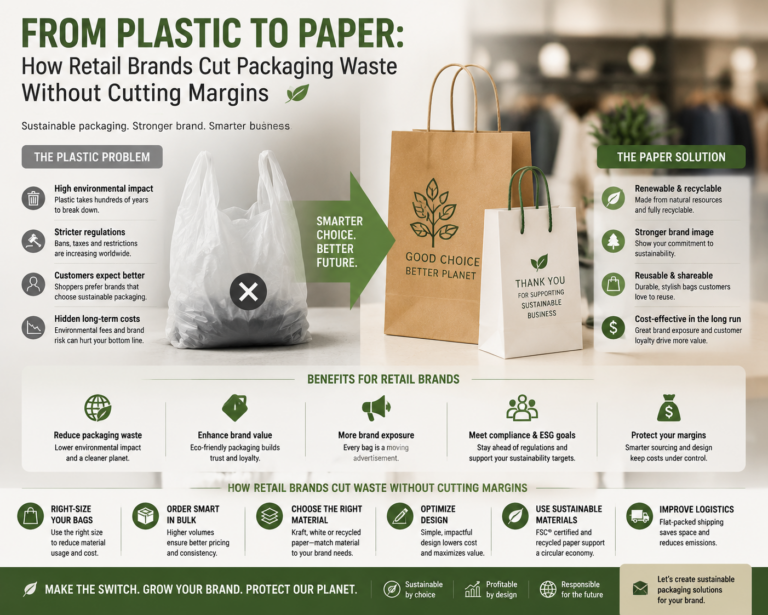

For decades, plastic bags were the default choice for retailers around the world because they were inexpensive, lightweight, and convenient. However, growing environmental concerns, changing consumer expectations, and stricter regulations have pushed brands to rethink their packaging strategies.
Today, more retail businesses are transitioning from plastic to custom paper bags as a way to reduce packaging waste while maintaining profitability.
The challenge for many retailers is finding the right balance:
How can brands adopt sustainable packaging without significantly increasing costs or reducing operational efficiency?
The answer lies in smarter material choices, optimized designs, and strategic packaging management.
This guide explores how retail brands can successfully move from plastic to paper while protecting their margins.
Why Retail Brands Are Moving Away From Plastic Bags
The shift from plastic packaging is driven by several major factors:
Changing Consumer Expectations
Modern shoppers increasingly consider sustainability when choosing where to buy.
Customers are more likely to support brands that demonstrate:
- Environmental responsibility
- Sustainable sourcing
- Reduced plastic usage
- Transparent business practices
A paper shopping bag sends a visible message that a brand values sustainability.
Government Regulations
Many countries and cities have introduced policies to reduce single-use plastic consumption.
Retailers are facing:
- Plastic bag bans
- Environmental taxes
- Restrictions on disposable packaging
- Corporate sustainability requirements
Switching to paper packaging helps businesses prepare for evolving regulations.
Brand Image and Marketing Value
Packaging is no longer just a functional item.
A shopping bag is a moving advertisement that customers carry through streets, shopping centers, and social environments.
A well-designed paper bag can:
- Increase brand visibility
- Improve customer perception
- Support premium positioning
- Encourage reuse
The Cost Concern: Is Paper Packaging More Expensive?
One of the biggest concerns retailers have is cost.
At first glance, paper bags may appear more expensive than traditional plastic bags. However, the total value of packaging involves more than the purchase price.
Retailers should consider:
- Customer perception
- Brand marketing value
- Reuse potential
- Regulatory costs
- Long-term sustainability goals
A premium paper bag can generate additional brand exposure that traditional plastic packaging cannot provide.
How Brands Reduce Paper Bag Costs Without Sacrificing Quality
Switching to paper does not mean accepting higher costs without strategy.
Successful retailers use several approaches to control expenses.
1. Optimize Bag Sizes
Many businesses use oversized bags unnecessarily.
By analyzing purchasing patterns, retailers can create a standard size system:
- Small bags for accessories
- Medium bags for everyday purchases
- Large bags for clothing or multiple products
Reducing unnecessary material usage directly lowers packaging costs.
2. Order in Larger Production Volumes
Bulk production helps reduce unit costs.
Benefits include:
- Lower manufacturing costs
- More stable pricing
- Better production efficiency
- Reduced setup expenses
For retailers operating multiple stores, centralized purchasing can create significant savings.
3. Choose the Right Paper Material
Not every business needs the most expensive paper option.
Different materials serve different purposes.
Kraft Paper Bags
Best for:
- Everyday retail use
- Eco-conscious brands
- Food and lifestyle businesses
Advantages:
- Cost-effective
- Natural appearance
- Strong sustainability message
White Card Paper Bags
Best for:
- Fashion retailers
- Beauty brands
- Premium stores
Advantages:
- Excellent printing quality
- Clean appearance
- Strong brand presentation
Recycled Paper Bags
Best for:
- Sustainability-focused businesses
- Eco campaigns
- Green retail positioning
Advantages:
- Supports environmental goals
- Appeals to conscious consumers
Designing Paper Bags for Maximum Value
A sustainable bag does not need to look basic.
Modern paper bags can combine environmental benefits with premium branding.
Popular customization options include:
High-Quality Printing
Retailers can showcase:
- Brand logos
- Company colors
- Marketing messages
- Seasonal campaigns
Professional printing turns packaging into a marketing tool.
Smart Finishing Choices
Premium effects can be used strategically.
Options include:
- Matte lamination
- Gloss coating
- Foil stamping
- Embossed logos
- Special textures
Brands can focus premium finishes on key visual elements rather than applying expensive upgrades everywhere.
Improving Sustainability Without Increasing Waste
Simply replacing plastic with paper is not enough.
Smart sustainable packaging focuses on the entire lifecycle.
Retail brands can improve environmental performance by choosing:
FSC-Certified Paper
Supports responsible forest management and sustainable sourcing.
Recycled Materials
Reduces demand for new raw materials and supports circular packaging systems.
Minimalist Designs
Using fewer materials can reduce waste while creating a modern appearance.
Reusable Structures
Stronger paper bags encourage customers to reuse them multiple times.
Reusable packaging increases brand exposure while reducing consumption.
Paper Bags Can Strengthen Customer Loyalty
Packaging influences how customers remember a brand.
A carefully designed paper bag creates:
- A premium shopping experience
- Emotional connection
- Higher perceived product value
- Increased willingness to share purchases online
For fashion, beauty, luxury, and lifestyle brands, packaging becomes part of the customer journey.
Industry Examples: Who Benefits From Switching to Paper?
Fashion Retail
Paper bags help communicate:
- Premium quality
- Brand identity
- Sustainable values
Beauty & Cosmetics
Luxury paper bags enhance:
- Product presentation
- Gift experience
- Unboxing value
Food & Beverage
Paper bags support:
- Eco-friendly positioning
- Takeaway packaging needs
- Customer convenience
Specialty Retail
Gift shops, bookstores, jewelry stores, and boutiques benefit from customized paper packaging that reinforces their unique identity.
Common Mistakes When Switching From Plastic to Paper
A successful transition requires careful planning.
Avoid these mistakes:
Choosing Price Over Performance
A cheaper bag that tears easily creates a poor customer experience.
Ignoring Transportation Costs
Paper bags can be optimized through:
- Flat-pack shipping
- Efficient carton sizes
- Bulk logistics planning
Over-Complicating Designs
Too many finishing techniques can increase costs without adding meaningful value.
Focus on the elements customers notice most.
Failing to Standardize Packaging
Retail chains should create clear packaging standards for:
- Sizes
- Materials
- Printing
- Handle types
Standardization improves efficiency and reduces costs.
How Retail Brands Can Build a Cost-Effective Paper Packaging Strategy
A successful transition usually follows these steps:
Step 1: Analyze Current Packaging Costs
Review:
- Plastic bag spending
- Usage volume
- Store requirements
- Customer expectations
Step 2: Define Sustainability Goals
Determine whether the priority is:
- Reducing plastic waste
- Meeting regulations
- Improving brand image
- Supporting ESG initiatives
Step 3: Select the Right Paper Solution
Choose based on:
- Product weight
- Brand positioning
- Budget
- Required durability
Step 4: Work With an Experienced Manufacturer
A professional supplier can help optimize:
- Material selection
- Bag structure
- Production volume
- Shipping efficiency
Conclusion
The transition from plastic to paper is not simply an environmental decision. It is a strategic packaging upgrade that can improve brand value while maintaining healthy profit margins.
By choosing the right materials, optimizing designs, ordering efficiently, and partnering with the right manufacturer, retail brands can reduce packaging waste without significantly increasing costs.
Sustainable packaging is no longer just a responsibility. It is an opportunity to create stronger customer connections and build a more recognizable brand.
Looking for cost-effective custom paper bags for your retail business? We help global brands transition from plastic to sustainable paper packaging with optimized materials, professional design support, and reliable bulk production. Contact us today for a customized packaging solution.