
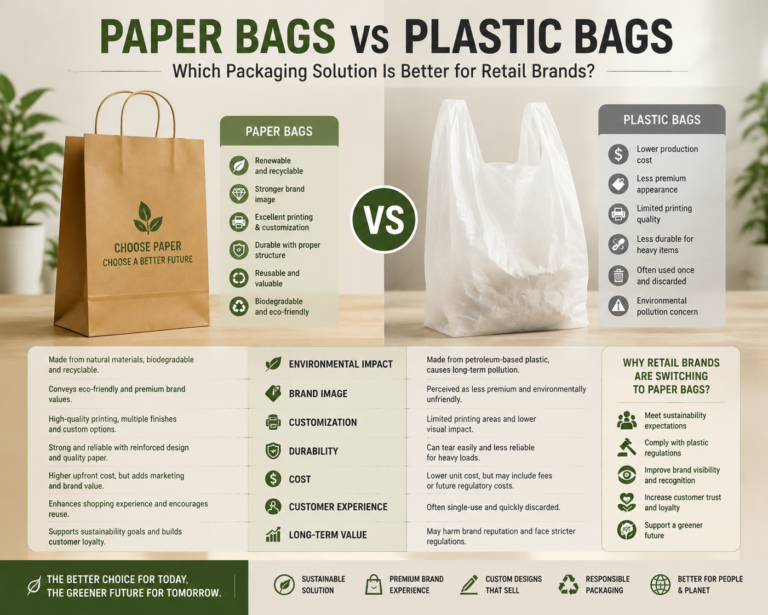

For decades, plastic bags have been one of the most common packaging choices for retailers worldwide. Their low cost, lightweight design, and moisture resistance made them a convenient solution for supermarkets, fashion stores, restaurants, and businesses across industries.
However, as sustainability expectations continue to rise, many retail brands are reconsidering their packaging strategies and asking an important question:
Are paper bags a better choice than plastic bags for modern retail businesses?
The answer depends on more than just price. Retailers need to consider factors such as durability, brand image, environmental impact, customer expectations, and long-term business value.
This guide compares paper bags vs plastic bags across key factors to help retail brands choose the right packaging solution.
Paper Bags vs Plastic Bags: A Quick Comparison
| Factor | Paper Bags | Plastic Bags |
|---|---|---|
| Sustainability | Renewable and recyclable materials | Higher environmental concerns |
| Brand Image | Premium and eco-friendly appearance | More functional and low-cost perception |
| Printing Quality | Excellent for custom branding | Limited premium presentation |
| Durability | Strong with proper structure | Flexible but less premium |
| Cost | Higher initial cost | Lower upfront cost |
| Customer Experience | Better for retail presentation | Basic carrying solution |
| Reusability | Often reused for shopping or storage | Frequently treated as disposable |
Both options have advantages, but modern retail trends increasingly favor packaging that combines functionality with brand value.
Why Retail Brands Are Moving From Plastic to Paper
The packaging industry is changing because customer expectations are changing.
Growing Demand for Sustainable Packaging
Consumers are paying more attention to the environmental impact of their purchases.
Many shoppers prefer brands that demonstrate:
- Responsible material choices
- Reduced plastic usage
- Sustainable business practices
- Transparent environmental commitments
A custom paper bag provides a visible sustainability message every time a customer leaves a store.
Increasing Plastic Regulations
Around the world, governments and regions are introducing stricter rules on single-use plastics.
Retail businesses are facing:
- Plastic bag restrictions
- Environmental fees
- Packaging reduction requirements
- Corporate sustainability targets
Switching to paper bags helps brands prepare for future packaging regulations.
Cost Comparison: Paper Bags vs Plastic Bags
Cost is one of the biggest considerations for retailers.
Plastic Bags: Lower Initial Cost
Plastic bags remain popular because they are inexpensive to produce.
Advantages:
- Low unit cost
- Lightweight shipping
- Easy mass production
- Moisture resistance
For businesses focused only on short-term packaging expenses, plastic may appear to be the cheaper option.
However, the lowest purchase price does not always represent the best overall value.
Paper Bags: Higher Value Beyond Cost
Paper bags usually have a higher production cost, but they provide additional benefits:
- Stronger brand presentation
- Higher perceived product value
- Better customer experience
- More opportunities for brand exposure
A beautifully designed paper bag can function as a mobile advertisement, generating visibility long after the purchase.
Brand Image: Packaging Is Part of Marketing
For retail brands, packaging is not just a container. It is part of the customer experience.
Plastic Bags Often Communicate:
- Convenience
- Basic functionality
- Low-cost shopping
Custom Paper Bags Communicate:
- Premium quality
- Environmental responsibility
- Attention to detail
- Brand professionalism
Industries where packaging presentation is especially important include:
- Fashion
- Cosmetics
- Jewelry
- Luxury retail
- Gift stores
- Lifestyle brands
For these businesses, packaging directly influences customer perception.
Printing and Customization Differences
Packaging is one of the most visible marketing tools a retailer owns.
Paper Bags Offer Superior Branding Opportunities
Paper bags provide an excellent surface for customization.
Options include:
- Full-color printing
- Brand logos
- Custom patterns
- Hot foil stamping
- Embossing
- Matte or gloss finishes
- Specialty textures
This allows brands to create packaging that matches their visual identity.
Plastic Bags Have Limited Premium Appeal
Although plastic bags can be printed, they generally offer fewer opportunities for luxury branding.
They are commonly associated with:
- Basic shopping bags
- Temporary packaging
- Functional use
For brands seeking a premium customer experience, paper packaging usually provides stronger visual impact.
Durability: Which Bag Is Stronger?
A common misconception is that paper bags are always less durable than plastic bags.
Modern paper bag manufacturing has improved significantly.
High-quality paper bags can include:
- Reinforced bottoms
- Strong rope handles
- Thick paper materials
- Laminated surfaces
- Folded support structures
These features allow paper bags to carry:
- Clothing
- Shoes
- Books
- Gift products
- Cosmetics
- Bottles
For heavy products, manufacturers can customize the structure to improve load capacity.
Sustainability: Which Option Has a Lower Environmental Impact?
Paper Bags
Advantages:
- Made from renewable resources
- Recyclable
- Biodegradable under appropriate conditions
- Supports sustainable branding
Many businesses choose:
- FSC-certified paper
- Recycled paper materials
- Water-based inks
- Plastic-free handles
Plastic Bags
Plastic packaging creates challenges because:
- Traditional plastics rely on fossil resources
- Recycling rates vary by region
- Plastic waste can persist for long periods
Although recyclable plastics and reusable plastic solutions exist, many consumers associate plastic bags with environmental concerns.
Customer Experience and Reuse Value
Packaging continues representing your brand after customers leave the store.
A strong paper bag can be:
- Reused for future shopping
- Used as gift packaging
- Shared in social media photos
- Stored at home
This extends brand visibility beyond the original purchase.
A customer carrying a well-designed paper bag becomes part of the brand’s marketing presence.
Choosing the Right Paper Bag Material
Not all paper bags are the same.
Retail brands can choose different materials based on their goals.
Kraft Paper Bags
Best for:
- Sustainable brands
- Organic products
- Everyday retail
Benefits:
- Natural appearance
- Cost-effective
- Eco-friendly image
White Card Paper Bags
Best for:
- Fashion stores
- Beauty brands
- Premium retail
Benefits:
- Smooth printing surface
- Strong color reproduction
- Professional appearance
Coated Paper Bags
Best for:
- Luxury products
- High-end campaigns
- Premium gifting
Benefits:
- Superior finish
- Excellent print quality
- Supports advanced customization
When Should Retail Brands Choose Paper Bags?
Paper bags are especially suitable for businesses that want to:
✅ Strengthen brand identity
✅ Improve customer experience
✅ Support sustainability goals
✅ Create premium packaging
✅ Reduce dependence on plastic
✅ Increase marketing exposure
Industries that commonly use custom paper bags include:
- Retail chains
- Fashion brands
- Beauty companies
- Restaurants
- Hotels
- Corporate gifting companies
How Retail Brands Can Switch to Paper Without Increasing Costs Too Much
A successful packaging transition requires planning.
1. Standardize Bag Sizes
Using fewer standard sizes reduces:
- Material waste
- Inventory complexity
- Production costs
2. Order in Bulk
Large-volume production helps reduce:
- Manufacturing costs
- Setup expenses
- Shipping frequency
3. Optimize Design
Premium packaging does not always require expensive upgrades.
Brands can focus investment on:
- Logo placement
- Key colors
- High-impact finishing areas
4. Work With an Experienced Manufacturer
A professional packaging supplier can help optimize:
- Material selection
- Structure design
- Production efficiency
- Shipping solutions
Conclusion
The choice between paper bags and plastic bags is no longer only about cost. Retail brands today must consider sustainability, customer expectations, brand positioning, and long-term value.
Plastic bags may offer lower upfront costs, but custom paper bags provide stronger branding opportunities, better customer experiences, and improved alignment with modern sustainability trends.
For retail brands looking to build recognition and create meaningful customer connections, paper packaging is becoming more than an alternative. It is a strategic branding tool.
Looking for custom paper bags designed for your retail business? We provide factory-direct production, premium printing, flexible customization, and sustainable packaging solutions for global brands. Contact us today for a customized quotation.