
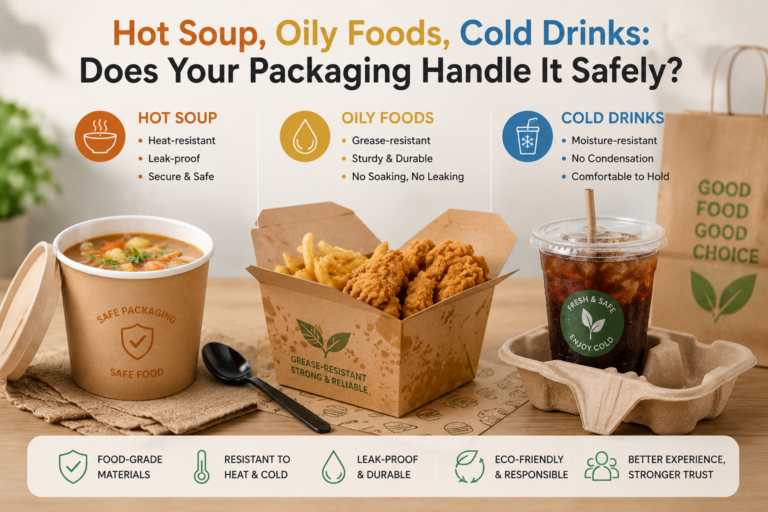

Food packaging does much more than carry meals from one place to another. It faces heat, oil, moisture, pressure, and time, all while protecting food quality and customer experience. A beautifully prepared meal can lose its appeal instantly if the packaging leaks, softens, cracks, or transfers odors before it even reaches the customer 🍲
In today’s takeaway and delivery-driven market, safe and reliable food packaging has become just as important as the food itself.
Different Foods Create Different Packaging Challenges
Not all food packaging works the same way. A paper cup holding iced coffee faces completely different conditions compared to a soup container filled with boiling broth.
Hot Soup
High temperatures test whether packaging materials can maintain their structure without softening, leaking, or releasing unwanted substances. Weak lids and thin containers often fail during transport, turning delivery bags into miniature disasters.
Oily Foods
Fried chicken, noodles, burgers, and pastries produce grease that can penetrate low-quality paper packaging. Without proper grease resistance, bags quickly become stained, weakened, and difficult to carry.
Cold Drinks
Cold beverages create condensation, especially during summer delivery. Cups and carriers must resist moisture while staying stable and comfortable to hold.
Food packaging lives through a daily obstacle course. Heat attacks from one direction, oil from another, while moisture quietly works like an invisible leak engineer 💧
Why Material Choice Matters
The safety and performance of food packaging begin with the material itself.
Kraft Paper
Kraft paper is widely used for takeaway bags because of its strength, eco-friendly appearance, and good carrying capacity. High-quality kraft paper can better resist tearing and pressure during transportation.
Food-Grade Coated Paper
For oily or moist foods, coated paper adds an extra protective layer that helps prevent grease leakage and improves durability.
Double-Wall Paper Cups
Hot beverages require cups that can handle temperature without becoming too hot to hold. Double-wall paper cups improve insulation while reducing hand discomfort.
Leak-Resistant Containers
Soup and sauce-heavy meals need secure lids and reinforced container structures to reduce leakage risks during delivery.
Choosing the wrong packaging material is like sending food into battle wearing cardboard armor.
Safety Is More Than Appearance
Many businesses focus heavily on packaging design and printing, but true food packaging quality goes deeper than appearance.
Safe packaging should:
- Use food-grade materials
- Resist heat and moisture
- Maintain structural strength
- Prevent leakage and contamination
- Protect flavor and freshness
Customers may not immediately notice high-quality packaging, but they instantly notice bad packaging.
A leaking soup lid or soggy takeaway bag can quietly damage customer trust faster than most businesses realize.
Delivery Culture Changed Packaging Standards
The rise of food delivery apps has transformed packaging from a supporting role into part of the dining experience itself.
In restaurants, customers once received meals directly from kitchen to table within minutes. Now, food often spends 20 to 60 minutes traveling through traffic, elevators, weather, and handling during delivery.
That journey places enormous pressure on packaging performance.
Modern food packaging must now survive:
- Long delivery times
- Temperature changes
- Stacking pressure
- Movement during transport
- Moisture buildup
Packaging is no longer passive. It has become active equipment in the food delivery chain 🚴
Eco-Friendly and Safe Can Work Together
Many businesses worry that sustainable packaging may sacrifice performance. In reality, modern eco-friendly food packaging has improved significantly.
Today’s high-quality paper packaging can offer:
- Food-safe materials
- Grease resistance
- Strong carrying strength
- Recyclable or biodegradable options
- Premium printing quality
Customers increasingly expect packaging that feels both safe and environmentally responsible.
A clean kraft paper bag or sturdy paper cup now communicates more than convenience. It signals brand responsibility.
How Businesses Can Choose Better Food Packaging
When selecting disposable food packaging, businesses should consider:
- Food temperature
- Oil and moisture levels
- Delivery distance
- Product weight
- Customer carrying experience
Testing packaging with real food conditions is essential. A container that looks perfect in a catalog may behave very differently during an actual delivery run.
Reliable packaging protects not only food, but also brand reputation.
Final Thoughts
Hot soup, oily foods, and cold drinks each challenge packaging in different ways. The right packaging solution must balance safety, durability, functionality, and customer experience all at once.
Because customers do not separate food quality from packaging quality. To them, both arrive together in the same bag.
And sometimes, the packaging becomes the first thing they judge before taking the very first bite 🍴