
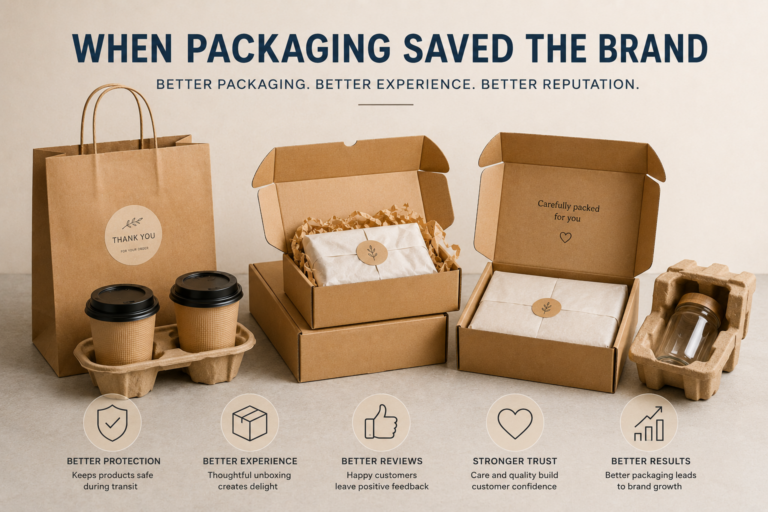

In today’s delivery-first and social-media-driven market, packaging has become much more than a simple container. It protects products, shapes customer impressions, influences online reviews, and quietly determines whether buyers return or never order again.
Many businesses spend huge budgets on advertising campaigns to improve their reputation. Yet sometimes, the real problem is not the product itself.
It is the packaging experience surrounding it.
From leaking takeaway containers to damaged ecommerce boxes, poor packaging can destroy customer confidence within seconds. But smart packaging redesigns have helped many businesses recover from complaints, improve reviews, and rebuild brand trust.
Sometimes the fastest way to repair a reputation is simply changing what the customer receives in their hands.
The Hidden Reason Customers Become Dissatisfied
Customers rarely separate packaging from the product itself.
A premium dessert arriving crushed during delivery no longer feels premium. A carefully prepared meal served in a weak paper bag suddenly feels careless. Even high-quality products lose value when the packaging experience fails.
For many businesses, packaging becomes the “silent employee” customers interact with first.
And when that employee performs badly, reviews quickly follow.
Case 1: A Global Fast-Food Chain Improved Delivery Satisfaction
As food delivery rapidly expanded worldwide, one major international fast-food chain began facing growing customer complaints:
- Soggy fries
- Spilled drinks
- Torn takeaway bags
- Missing items during transport
The company eventually redesigned its delivery packaging system to improve the overall customer experience.
The upgrades included:
- Stronger carrying handles
- Better heat retention
- Sealed compartments
- Improved organization inside takeaway bags
- Packaging structures designed specifically for delivery conditions
The result was significant.
Customers reported:
- Better food condition upon arrival
- Improved hygiene confidence
- Higher satisfaction with delivery orders
Interestingly, the food recipes barely changed.
What changed was the packaging experience.
The new packaging made delivery feel intentional instead of chaotic.
Case 2: A Popular Coffee Chain Reduced Complaints Through Better Cup Packaging
One internationally recognized coffee retailer struggled with a problem common in takeaway beverage service: leaking drinks.
Customers commuting to work frequently experienced:
- Loose lids
- Coffee spills
- Weak cup carriers
- Poor transport stability
Although the beverages themselves remained popular, repeated packaging failures slowly damaged customer perception.
The company later improved:
- Lid-locking mechanisms
- Cup insulation
- Drink carrier stability
- Takeaway transport design
These improvements reduced complaints and strengthened the brand’s image of convenience and reliability.
In takeaway businesses, even a small spill can create a surprisingly large reputation problem.
Packaging became customer service before employees even spoke to the customer.
Case 3: A Premium Technology Company Turned Packaging Into an Experience
One globally influential consumer electronics company transformed packaging into part of the product itself.
Instead of treating boxes as disposable containers, the company designed packaging to create:
- Anticipation
- Clean presentation
- Organized product placement
- Minimalist visual appeal
- A controlled unboxing experience
Customers began associating the packaging experience with product quality and brand value.
Even before turning on the device, buyers already felt they had purchased something carefully designed.
This approach influenced countless other industries, from cosmetics to luxury retail packaging.
The packaging itself became part of the brand identity.
Case 4: Small Restaurants Improved Ratings Through Smarter Packaging
During the rise of food delivery platforms, many local restaurants initially used basic packaging designed only for dine-in leftovers.
This caused multiple operational problems:
- Steam destroying crispy food
- Sauce leakage
- Weak paper bags tearing during transport
- Poor presentation after delivery
Restaurants that upgraded to delivery-focused packaging often saw noticeable improvements in:
- Customer reviews
- Repeat orders
- Refund reduction
- Overall customer satisfaction
Simple changes created major results:
- Vent holes for fried foods
- Waterproof takeaway bags
- Double-wall soup containers
- Sealed packaging stickers
- Cleaner branded presentation
Customers interpreted these packaging upgrades as signs of professionalism and care.
In many cases, packaging directly influenced whether customers trusted the restaurant again.
Packaging Has Become Part of Brand Reputation
Modern customers share everything online:
- Delivery meals
- Ecommerce unboxing experiences
- Retail shopping bags
- Gift packaging
- Coffee cups
- Product presentation
That means packaging now influences:
- Customer trust
- Social media exposure
- Online reviews
- Brand perception
- Repeat purchases
A damaged package no longer fails privately.
It fails publicly.
The Rise of “Shareable” Packaging
Many businesses now intentionally design packaging for:
- Social media photos
- Unboxing videos
- Customer-generated content
- Delivery presentation
- Gift experiences
Textured paper, magnetic gift boxes, custom inserts, foil printing, and premium kraft packaging are no longer just decorative choices.
They create memorable customer moments.
A well-designed package can quietly turn a customer into a free marketer.
What Businesses Can Learn From These Examples
The most successful companies understand an important truth:
Customers judge the e
A strong paper bag suggests reliability.
A clean seal suggests hygiene.
A premium gift box suggests quality.
A leaking container suggests carelessness.
Packaging communicates long before the product is used.
And customers notice every detail.
Final Thoughts
Packaging is no longer just operational material sitting quietly in the background of business.
It has become part of customer experience, online reputation, and brand storytelling.
Many companies attempt to repair customer trust through marketing campaigns and discounts. Yet sometimes the real solution is much simpler:
- Better structure
- Better protection
- Better presentation
- Better delivery experience
Sometimes improving the customer experience begins with improving the box itself. 📦