

When businesses choose custom paper bags, design is often the first thing they focus on. Colors, logos, and printing styles all play an important role in branding. But behind every high-quality paper bag is something even more important: the material itself.
Different paper materials directly affect the strength, appearance, texture, printing quality, and overall customer experience of the packaging. A luxury boutique, a bakery, and a takeaway restaurant may all use paper bags, but the materials they choose are usually very different because their packaging needs are completely different.
Understanding how paper materials influence packaging quality can help businesses make smarter decisions and create packaging that better fits their products and brand image.
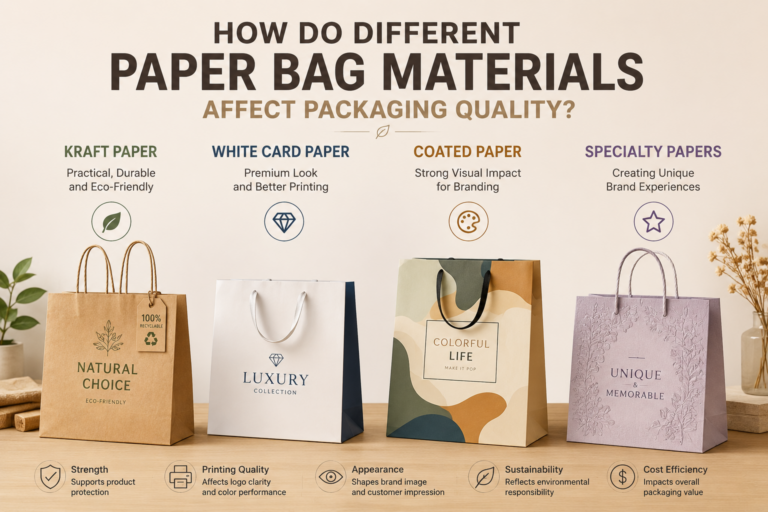
Kraft Paper: Practical, Durable, and Eco-Friendly
Kraft paper is one of the most commonly used materials for paper bag production. It is known for its natural appearance, strong durability, and eco-friendly image.
Brown kraft paper gives packaging a more organic and sustainable feel, making it popular among cafés, bakeries, grocery stores, and environmentally conscious brands. White kraft paper offers a cleaner and more modern look while still maintaining good strength.
One of the biggest advantages of kraft paper is its tear resistance and carrying capacity. It performs well for takeaway bags, shopping bags, and daily retail use. At the same time, its slightly textured surface creates a simple and authentic packaging style that many brands prefer today.
However, compared with premium papers, kraft paper may not produce the same level of luxury printing effects or smooth finishing.
👉 Explore our custom paper bag solutions for retail, takeaway, gift, and promotional packaging.
White Card Paper: Premium Look and Better Printing
White card paper is widely used for luxury retail packaging, gift bags, jewelry bags, and cosmetic packaging because of its smooth surface and premium appearance.
Compared with kraft paper, white card paper usually feels thicker, more refined, and visually cleaner. It supports high-definition printing, detailed patterns, foil stamping, UV coating, embossing, and other advanced finishing techniques very well.
For businesses that want packaging to create a stronger first impression, white card paper is often the preferred choice. It helps brands achieve a more elegant and professional image, especially in fashion, beauty, and high-end retail industries.
The trade-off is that white card paper can be more expensive and sometimes less flexible than kraft paper for heavy-duty carrying applications.
Coated Paper: Strong Visual Impact for Branding
Coated paper is often chosen when businesses want bright colors, glossy effects, and highly detailed printing. The coated surface allows ink to appear sharper and more vibrant, making logos and product images stand out more clearly.
This material is commonly used for promotional packaging, event bags, and marketing campaigns where visual impact matters most.
Matte or glossy lamination can also be added to improve water resistance and enhance the premium feel of the bag. However, coated paper packaging may appear less natural or eco-focused compared with kraft paper styles.
Specialty Papers: Creating Unique Brand Experiences
Some brands choose specialty papers to create more distinctive packaging experiences. Textured paper, embossed paper, recycled paper, and art paper can all help packaging stand out visually and physically.
Luxury brands often use specialty paper to create a more memorable unboxing experience. The texture, thickness, and touch of the paper can communicate product value before customers even open the bag.
Although specialty papers can increase packaging costs, they often help brands strengthen their identity and improve customer perception.
Choosing the Right Material for Your Business
There is no single “best” paper material for every business. The right choice depends on several factors:
- Product weight and usage
- Brand positioning
- Printing requirements
- Budget
- Customer expectations
- Environmental goals
For example, takeaway restaurants may prioritize durability and cost-efficiency, while cosmetic brands may focus more on luxury appearance and premium finishing.
The most successful packaging solutions usually balance functionality, branding, and customer experience together.
Packaging Quality Is More Than Appearance
A paper bag is more than just a container for carrying products. It represents the brand, protects the product, and shapes the customer’s impression of the business.
The right material can improve durability, elevate brand image, and create better packaging performance in real-world use. Whether it is kraft paper for eco-friendly practicality or white card paper for premium presentation, material selection plays a major role in packaging quality.
As more businesses invest in custom packaging, choosing the right paper material becomes not only a production decision, but also a branding strategy.