
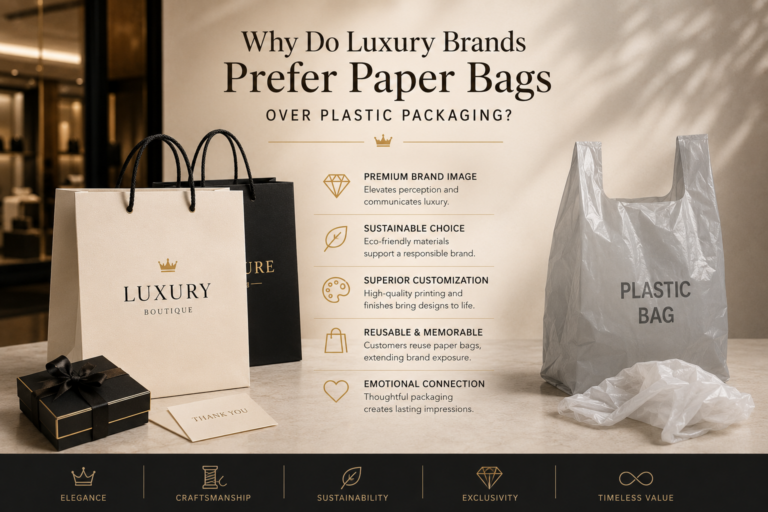

Luxury brands rarely make packaging decisions by accident.
From the texture of a shopping bag handle to the sound of tissue paper unfolding, every detail is carefully designed to shape how customers feel about a product. In the luxury world, packaging is not simply protection for merchandise. It is part of the brand experience itself.
This is one reason why many premium fashion houses, jewelry companies, cosmetic brands, and boutique retailers consistently choose paper bags over plastic packaging.
At first glance, this may appear to be only an environmental decision. Sustainability certainly plays a role. But the real explanation goes much deeper into psychology, branding, customer perception, and emotional value.
Luxury packaging is designed to communicate status before the product is even opened. ✨
Packaging Is the First Physical Interaction With a Brand
For luxury brands, customer experience begins long before the product is used.
The moment a customer walks out of a store carrying a branded paper bag, the packaging itself becomes part of the purchase experience.
Unlike plastic bags, paper bags naturally create a feeling of:
- Sophistication
- Craftsmanship
- Exclusivity
- Elegance
- Premium value
A thick textured paper bag with rope handles feels deliberate and refined. Thin plastic packaging, on the other hand, often feels temporary and disposable.
Luxury brands sell emotion as much as products, and paper packaging supports that emotional storytelling far more effectively.
Paper Bags Create a Premium Visual Identity
Visual perception strongly influences how consumers judge value.
Studies in consumer psychology consistently show that packaging materials affect how customers perceive product quality. Even before touching the product itself, customers subconsciously associate certain materials with higher status.
Paper bags help create this perception because they offer:
- Matte textures
- Rich printing finishes
- Structured shapes
- Minimalist aesthetics
- Elegant color presentation
Luxury brands often use:
- Embossing
- Foil stamping
- Soft-touch lamination
- Thick kraft paper
- Cotton rope handles
These details transform packaging into something that feels closer to fashion accessory design than disposable wrapping.
In many luxury stores, the bag itself becomes recognizable branding walking through the streets like a portable flagship store.
Plastic Packaging Often Feels Mass-Market
Plastic bags are highly practical for many industries, but luxury brands usually avoid them because they are visually associated with:
- Fast consumption
- Convenience retail
- Disposable shopping
- Low-cost packaging
- High-volume production
Luxury brands carefully distance themselves from anything that appears overly commercial or temporary.
They want customers to feel that products are curated, not mass distributed.
Paper packaging helps slow down the shopping experience psychologically. It feels more intentional, more ceremonial, almost like the packaging is inviting customers to pause before opening the purchase.
Plastic rarely creates that emotional atmosphere.
Sustainability Has Become Part of Luxury Branding
Modern luxury consumers increasingly care about environmental responsibility.
High-end brands are under growing pressure to demonstrate sustainable practices not only in products, but also in packaging.
Paper bags help brands communicate:
- Environmental awareness
- Responsible sourcing
- Modern values
- Reduced plastic usage
- Sustainable branding efforts
Even when customers do not consciously analyze packaging materials, they often associate paper packaging with greener business practices.
For luxury brands, perception matters enormously.
A carefully designed paper bag quietly communicates:
“This brand thinks beyond the transaction.”
Paper Bags Offer Better Customization and Printing
Luxury packaging depends heavily on visual precision.
Paper surfaces allow brands to achieve high-end printing effects that are difficult to reproduce on many plastic materials.
Paper bags support:
- Metallic foil logos
- UV spot printing
- Embossed textures
- Deep color saturation
- Minimalist typography
- Artistic finishes
This gives designers far greater creative flexibility.
Luxury branding often relies on subtle details rather than loud graphics. Paper surfaces handle these refined visual elements exceptionally well.
A black matte paper bag with a small gold embossed logo can feel more luxurious than highly colorful packaging screaming for attention.
Reusability Extends Brand Exposure
Interestingly, many customers keep luxury paper bags long after purchase.
Some reuse them for:
- Gift packaging
- Storage
- Travel accessories
- Boutique shopping
- Home organization
This extends brand visibility far beyond the original shopping experience.
In cities around the world, luxury paper bags often become social symbols carried through malls, airports, cafés, and hotels.
The packaging itself starts functioning almost like wearable branding.
Luxury Packaging Is About Storytelling
Luxury brands are not simply selling products.
They sell:
- Identity
- Taste
- Lifestyle
- Status
- Emotional aspiration
Packaging becomes part of that story.
A beautifully crafted paper bag can communicate ideas like:
- Timelessness
- Handcrafted quality
- Elegance
- Artistic value
- Heritage craftsmanship
Plastic packaging struggles to create the same emotional depth because consumers often associate it with speed and disposability rather than permanence and care.
Minimalism and Modern Luxury Go Together
Modern luxury branding has shifted dramatically toward minimalism.
Today’s premium packaging trends often favor:
- Neutral colors
- Clean typography
- Soft textures
- Understated branding
- Natural materials
Paper bags fit naturally into this design language.
Their texture, structure, and tactile feel align perfectly with modern minimalist aesthetics that dominate luxury retail today.
Many premium brands now intentionally reduce excessive packaging in favor of elegant simplicity.
In this environment, paper packaging feels less like a container and more like part of the product presentation itself.
Are Paper Bags Always Better?
Not necessarily.
Plastic packaging still offers advantages in:
- Waterproof protection
- Durability
- Lightweight shipping
- Cost efficiency
Certain industries still rely heavily on plastic for functional reasons.
However, luxury brands prioritize emotional perception just as much as practicality.
For them, packaging must communicate value instantly, often within seconds of visual contact.
Paper bags consistently perform better in that emotional and psychological space.
The Future of Luxury Packaging
As sustainability and premium branding continue evolving together, paper packaging will likely remain dominant in the luxury market.
However, luxury packaging itself is changing.
Brands are increasingly exploring:
- Recyclable materials
- Reusable packaging
- FSC-certified paper
- Minimalist structures
- Eco-friendly inks
- Magnetic closure paper packaging
- Hybrid reusable bag concepts
The goal is no longer simply “beautiful packaging.”
Now brands want packaging that feels premium while also aligning with modern environmental values.
Final Thoughts
Luxury brands prefer paper bags over plastic packaging because paper better supports the emotional, visual, and psychological experience they want customers to feel.
Paper bags communicate:
- Elegance
- Craftsmanship
- Sustainability
- Exclusivity
- Premium quality
They transform packaging from a disposable necessity into part of the brand identity itself.
In luxury retail, even the bag becomes a stage where branding continues performing after the customer leaves the store.
And sometimes, that quiet paper bag drifting through a city street says more about status and taste than the product hidden inside it. 🌍