
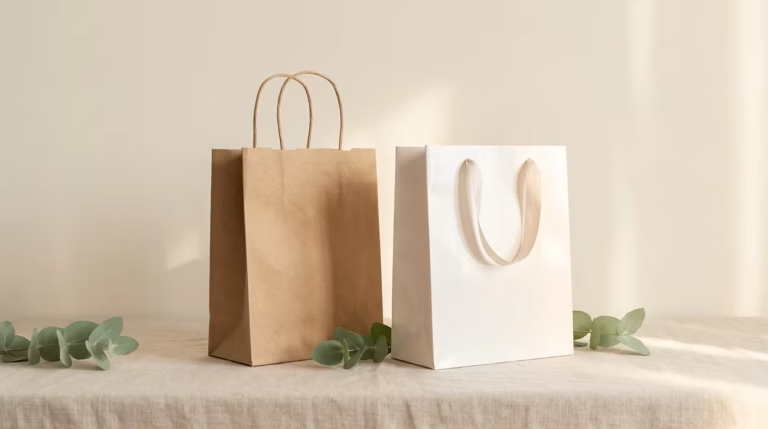

You’ve made the decision to switch to paper. Smart move. But then your supplier asks the question that stops most brands in their tracks: “Kraft or coated?”
It sounds like a small detail. It isn’t. The choice between kraft and coated paper bags shapes how your brand looks on the street, how your bag survives a rainy day, what it costs per unit, and — crucially in 2026 — how easily it gets recycled. Pick wrong, and you either overpay for a finish you don’t need or undercut the premium feel your product deserves.
This guide breaks down both options honestly, so you can match the bag to your brand instead of defaulting to whatever the catalog shows first.
First, what actually makes them different?
Both start from the same place: paper. The difference is the surface.
-
Kraft paper bags are made from kraft pulp with its characteristic long-fiber structure, left in a natural (brown) or bleached (white) state. The surface is uncoated — matte, tactile, and organic. That long fiber is also why kraft is strong: it gives excellent tensile strength, resisting tearing and punctures during handling.1
-
Coated paper bags take a paper base and add a surface layer — anything from a water-based or aqueous coating to a matte/gloss laminate film. This coating delivers a smooth, refined finish, sharper print reproduction, and a barrier against moisture and grease.
In short: kraft is raw, rugged, and honest. Coated is smooth, polished, and protective. Neither is “better” — they’re built for different jobs.
The head-to-head comparison
The sustainability question — read this carefully
Here’s where many brands get caught out. Not all “coated” is created equal, and this directly affects your eco-credentials and your 2026 compliance position.
- Water-based / aqueous coatings are generally repulpable and recycle through standard paper streams — keeping a coated bag’s eco-profile close to kraft’s.
- Plastic film lamination (PE/BOPP) gives a glossy, durable finish but fuses plastic to paper, which can complicate or prevent recycling unless the facility can separate the layers.
Kraft, being uncoated, is the simplest recycling story — it goes straight into widely available paper recycling streams, and untreated paper naturally biodegrades, eliminating microplastic concerns.2
The takeaway: if you want a coated finish and a clean sustainability claim, specify a recyclable water-based coating, not a plastic laminate. A serious factory will tell you exactly which coating they’re using and whether it’s recyclable. If they can’t, that’s a red flag — especially with the EU’s tightening packaging recyclability rules taking effect in 2026.
So which one fits your brand?
Forget “which is better.” Ask “which is right for what I sell and who I sell to.”
Choose KRAFT if your brand is…
- Eco-first, organic, artisanal, or natural-positioned — kraft looks sustainable, reinforcing your message instantly
- Cost-conscious at scale — lower unit price, ideal for high-volume retail or grocery
- Carrying dry goods, apparel, or products that don’t need a moisture barrier
- After that warm, tactile, “handmade” feel customers associate with conscious brands
Choose COATED if your brand is…
- Premium, fashion, beauty, or gifting — where the bag is part of the product experience
- Running bold, colorful, photographic, or detailed print designs that need a crisp surface
- Selling products exposed to humidity or light moisture
- Willing to invest slightly more per unit for a luxe, high-perceived-value finish — just specify a recyclable water-based coating to keep it green
A practical middle path
You don’t always have to choose one for everything. Many brands run a dual strategy: kraft for everyday/high-volume lines and a coated, premium bag for flagship products, gift sets, or seasonal launches. Done right, both can carry the same logo and color system, so your brand stays consistent while each bag does the job it’s built for.
The key in every case: match the GSM (paper weight) to the load. A 120 GSM bag with twist handles and a reinforced base holds significantly more than a lighter one3 — so spec strength to your actual products, not just the surface finish.
Bottom line: Kraft wins on cost, raw eco-appeal, and recycling simplicity. Coated wins on premium look, print quality, and protection — as long as you choose a recyclable coating. The right answer is the one that matches your products, your customers, and the brand impression you want walking out the door.
Not sure which spec fits your products? As a factory-direct manufacturer with 8 years of OEM/ODM experience, we help retail brands choose the right material, GSM, coating, and finish — and produce both kraft and coated options at wholesale scale. Explore fully customizable custom paper bags built to your brand, your budget, and your sustainability standards.