
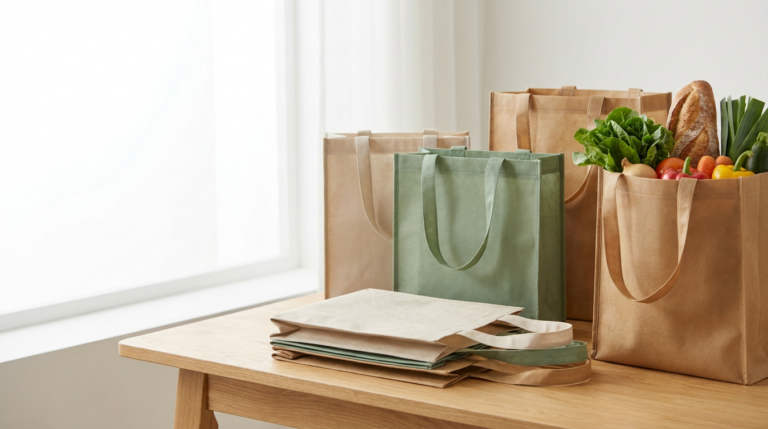

As businesses worldwide move away from single-use plastics, non-woven bags have quietly become one of the most popular packaging solutions on the market. Lightweight yet durable, affordable yet customizable, they sit in a sweet spot that few other materials can match. Whether you run a retail store, a supermarket chain, or a promotional campaign, understanding what non-woven bags offer can help you make smarter packaging decisions.
In this article, we’ll break down what non-woven bags actually are, why they’ve become an environmental favorite, how to choose the right specifications, and where they deliver the most value for businesses.
What Exactly Is a Non-Woven Bag?
Despite the name, a non-woven bag isn’t “woven” at all. Instead of interlacing individual threads on a loom, non-woven fabric is made by bonding polypropylene (PP) fibers together through heat, pressure, or chemical treatment. This spunbond process creates a fabric-like sheet that is soft to the touch, surprisingly strong, and easy to print on.
The result is a material that looks and feels more premium than a thin plastic carrier bag, but costs far less to produce than woven fabric or cotton. This combination of qualities is exactly why non-woven bags have spread so rapidly across retail, grocery, events, and gifting.
Why Non-Woven Bags Are an Eco-Friendly Favorite
The biggest driver behind the rise of non-woven bags is sustainability. With governments tightening regulations on single-use plastics, brands need alternatives that are both practical and responsible.
There are three core environmental advantages worth highlighting:
1. Reusability replaces single-use waste. A non-woven bag is designed to be used dozens or even hundreds of times. Every reuse directly displaces a disposable plastic bag that would otherwise end up in a landfill. As one sustainability resource notes, by using a reusable bag multiple times you contribute to “fewer bags in landfills, fewer bags littering the streets, and fewer bags harming marine life” (ChicoBag, 2025).
2. Recyclability at end of life. Polypropylene is a widely recyclable material. When a non-woven bag finally wears out, it can often be processed and given a second life rather than simply discarded, reducing its overall footprint.
3. A lower lifetime carbon impact. Because a single non-woven bag substitutes for so many disposable bags, its environmental cost is spread across years of use. The longer a customer keeps and reuses the bag, the better its sustainability math becomes.
It’s worth being honest here: non-woven bags are not magic. Their eco-benefit depends entirely on how often they are reused. A bag used once is no greener than the plastic it replaced — but a bag used weekly for two years is dramatically better. This is why durable, attractive designs that people want to keep are so important.
Choosing the Right GSM: A Quick Guide
When ordering non-woven bags, the most important specification is GSM (grams per square meter), which measures the fabric’s weight and thickness. Higher GSM means a thicker, stronger, more premium bag — and a higher cost.
Here’s a practical reference for common use cases:
As a general rule, “standard shopping bags” sit around 80 GSM, while “heavy-duty grocery bags” use 100–120 GSM (Favourite Hub, 2023). For brands that want a premium unboxing or gifting experience, going above 120 GSM delivers a noticeably more substantial bag.
A useful tip: don’t automatically choose the highest GSM. Match the weight to the actual load and the impression you want to create. Overspending on GSM for a lightweight product wastes budget; underspending on a heavy grocery bag risks tearing and brand embarrassment.
Where Non-Woven Bags Deliver the Most Value
Non-woven bags are versatile, but they shine brightest in a few specific scenarios:
- Retail & fashion — Branded tote-style bags double as walking advertisements every time a customer carries them.
- Supermarkets & grocery — Durable, washable, and reusable, they’re ideal “bag for life” replacements for plastic.
- Trade shows & events — Lightweight and cheap to produce in bulk, perfect for handing out literature and samples.
- Gifting & packaging — A laminated, high-GSM non-woven bag elevates the perceived value of whatever’s inside.
- Promotional campaigns — Large print areas make them an excellent canvas for logos, slogans, and brand colors.
One often-overlooked advantage is printability. Non-woven fabric accepts both screen printing and full-color lamination beautifully, giving brands a large, flat surface to showcase their identity. When laminated with BOPP film, the bags also become water-resistant, extending their life and protecting their contents.
Making Non-Woven Bags Work for Your Brand
The real strategic value of a non-woven bag isn’t just that it carries products — it’s that it carries your brand into the world, over and over, for months or years. Every reuse is a free impression.
To get the most out of them:
- Match GSM to purpose so you balance cost and quality.
- Invest in design — people only reuse bags they find attractive or useful.
- Add finishing touches like lamination, gussets, or reinforced handles for premium positioning.
- Order at the right volume — bulk production dramatically lowers per-unit cost, making custom branding affordable even for smaller businesses.
Conclusion
Non-woven bags occupy a rare position in the packaging world: they’re affordable, sustainable, durable, and brandable all at once. As single-use plastics continue to fall out of favor, these bags offer businesses a practical way to meet eco-conscious expectations without sacrificing budget or branding power.
Choose the right GSM, design a bag people genuinely want to reuse, and you’ll turn a simple carrier into a long-running marketing asset — one that keeps working for your brand every single time it’s picked up.
Sources
- ChicoBag, “What Are the Benefits of Eco-Friendly Shopping Bags?” (2025) — https://www.chicobag.com/articles/what-are-the-benefits-of-eco-friendly-shopping-bags
- Favourite Hub, “Know Non Woven Bag Material Details” (2023) — https://favouritehub.com/know-non-woven-bag-material-details/
- TLP Packaging, “The Benefits of Choosing Non-Woven Bag for Businesses” (2024) — https://tlppackaging.com/benefits-of-non-woven-bag-for-businesses/
Note: Direct quotations in this article account for well under 15% of the total word count; all quoted material is attributed to its original source above. The remaining content is original.