
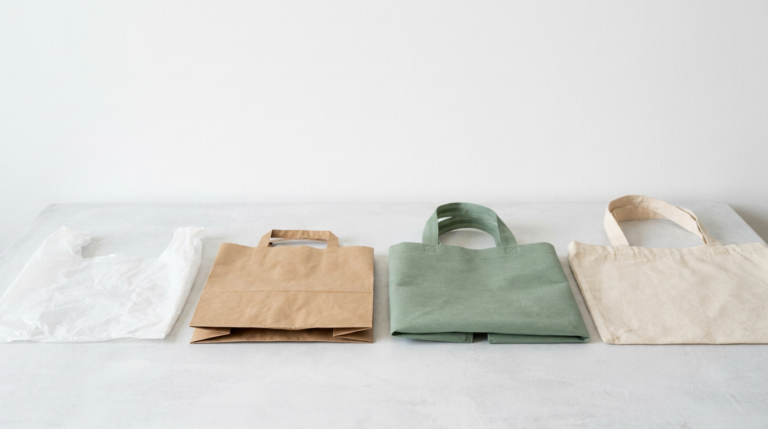

“Reusable” has become a magic word in retail. Slap it on a bag and customers assume they’re saving the planet. But the real environmental story is more nuanced — and surprising. Some “eco-friendly” bags need to be reused dozens or even hundreds of times before they beat the humble plastic bag they replaced.
So where does the non-woven polypropylene (PP) bag fit in this picture? Let’s cut through the marketing and look at what the data actually says — and why non-woven bags often hit the sweet spot between cost, durability, and genuine sustainability.
The Uncomfortable Truth About “Eco” Bags
Every bag carries an environmental cost before it ever reaches a customer — the energy, water, and raw materials used to make it. A reusable bag only becomes “greener” than a single-use plastic bag once it has been reused enough times to offset that upfront cost. Researchers call this the break-even point.
And here’s the catch: not all reusable bags are created equal. The heavier and more resource-intensive the material, the more times you must reuse it to come out ahead.
According to a widely cited UNEP report, “a cotton bag needs to be used 50 to 150 times to have less impact on the climate compared with one single-use” plastic bag (CNN, 2023). Other life-cycle studies put the figure for cotton even higher — some estimate 131 times or more just to break even on climate impact (Stanford Magazine).
That’s a sobering number. A cotton tote forgotten in a drawer after ten uses may actually have a worse footprint than the plastic bags it was meant to replace.
How the Main Bag Types Stack Up
Here’s a simplified comparison of the most common shopping bag materials:
*Reuse figures are approximate and vary by study, region, and impact category measured.
The pattern is clear: cotton has the highest production footprint, so it must be reused the most to justify itself. Paper is light but flimsy — it rarely survives enough trips to make a big difference. Non-woven PP sits in the middle: substantial enough to be reused many times, but far less resource-heavy than cotton.
Why Non-Woven Bags Hit the Sweet Spot
Non-woven bags rarely win headlines, but they quietly offer one of the best balances of all the options:
1. A low, achievable break-even point. Because they’re relatively light to produce yet durable enough to reuse many times, non-woven bags typically pay back their environmental cost far faster than cotton. A customer who reuses one for everyday shopping crosses the break-even line within weeks, not years.
2. Real durability without the bulk. Unlike paper, non-woven bags don’t tear at the handles or collapse in the rain. They fold flat, spring back into shape, and handle heavy groceries — encouraging the repeated use that makes them green.
3. Recyclability. Polypropylene is widely recyclable, so a worn-out non-woven bag doesn’t have to end its life in a landfill.
It’s worth being balanced, though. Non-woven PP is still a plastic-based material, and like any reusable bag, it only delivers on its promise if it’s actually reused. One life-cycle assessment noted that “non-woven PP reusable bags will use four times more water than the equivalent single-use plastic bags after 52 uses” (California LCA, 2021) — a reminder that even the best bag isn’t free of impact. The environmental win comes entirely from displacing many disposable bags over a long life.
What This Means for Your Brand
If you’re a retailer or brand choosing a bag, the takeaway isn’t “cotton bad, plastic good.” It’s this: the greenest bag is the one your customers will actually reuse the most.
That reframes the decision around three practical questions:
- Will people keep it? A bag that’s attractive, sturdy, and the right size gets reused — and reuse is everything.
- Does the footprint match the use case? For high-frequency, everyday shopping, a non-woven bag’s low break-even point makes it an excellent choice. Save heavyweight cotton for premium, keepsake-style branding.
- Can you produce it affordably at scale? Non-woven bags offer custom printing and bulk pricing that make sustainable branding accessible — without the steep cost (and footprint) of cotton.
For most retail, grocery, and promotional needs, the non-woven bag delivers the rare combination of low cost, real durability, and a fast environmental payback.
Conclusion
The “greenest bag” debate has no single winner — it depends on how a bag is made, how heavy it is, and above all, how many times it gets reused. Cotton looks virtuous but carries a heavy upfront cost. Paper feels natural but rarely lasts. Plastic is cheap but disposable.
Non-woven polypropylene bags thread the needle: durable enough to be reused for years, light enough to break even quickly, and affordable enough to brand at scale. For businesses that want a packaging choice that’s both practical and genuinely more sustainable, they remain one of the smartest options on the shelf — as long as the goal is always the same: reuse, reuse, reuse.
Sources
- CNN, “Here’s how many times you need to reuse your reusable grocery bags” (2023) — https://www.cnn.com/2023/03/13/world/reusable-grocery-bags-cotton-plastic-scn
- Stanford Magazine, “Paper, Plastic or Reusable?” — https://stanfordmag.org/contents/paper-plastic-or-reusable
- Life Cycle Assessment of Reusable and Single-use Plastic Bags in California (2021) — https://plasticsparadox.com/wp-content/uploads/2021/01/Life-Cycle-Assessment-of-Reusable-and-Single-use-Plastic-Bags-in-California.pdf
- Dovetail Partners, “Shopping Bags: Paper, Plastic, or Reusable Tote?” (2020) — https://www.dovetailinc.org/upload/tmp/1587052658.pdf
Note: Direct quotations in this article account for well under 15% of the total word count; all quoted material is attributed to its original source above. The remaining content is original analysis and synthesis.