
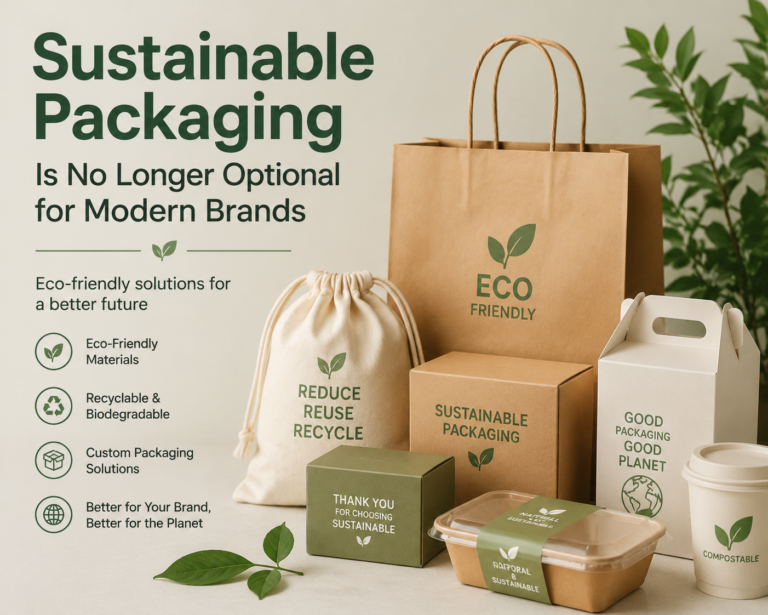

In today’s global marketplace, sustainability is no longer a marketing advantage—it has become a business necessity. From regulatory pressure to shifting consumer expectations, modern brands are being pushed to rethink how their products are packaged, delivered, and experienced.
Packaging is no longer just a protective layer. It is now a direct reflection of a brand’s values.
🌍 The Shift: From Convenience to Responsibility
Over the past decade, the packaging industry has undergone a major transformation. Traditional plastic-heavy solutions are being replaced by recyclable, biodegradable, and reusable alternatives.
This shift is driven by three major forces:
- 🌿 Environmental regulations in Europe and North America
- 🛒 Consumer demand for eco-conscious brands
- 📦 E-commerce growth increasing packaging waste visibility
Today’s customers don’t just buy products—they evaluate the environmental impact behind them.
📉 Why Traditional Packaging Is Losing Ground
Brands that still rely heavily on non-recyclable or single-use packaging are facing increasing challenges:
- Higher regulatory compliance costs
- Negative brand perception among eco-conscious consumers
- Reduced competitiveness in retail and e-commerce markets
In many industries, packaging choices now influence purchasing decisions as much as price or product quality.
📦 What Sustainable Packaging Actually Means
Sustainable packaging is not just about using “green materials.” It includes a full lifecycle approach:
✔ Recyclable materials (paper, cardboard, mono-material plastics)
✔ Reusable packaging systems
✔ Reduced material usage and optimized design
✔ Responsible sourcing and production
✔ Lower carbon footprint in logistics
Common sustainable packaging solutions include:
- Custom kraft paper bags
- Recyclable paper boxes
- Corrugated shipping cartons
- Reusable non-woven bags
- Compostable food packaging
🏭 How Manufacturers Are Adapting
Forward-thinking packaging manufacturers are upgrading production in several ways:
- Investing in eco-friendly raw materials
- Improving printing technology to reduce waste
- Offering low-MOQ sustainable solutions for SMEs
- Designing packaging that balances durability and recyclability
For brands, this means sustainability is now accessible—not just for large corporations, but also for startups and mid-sized businesses.
💡 Sustainability as a Branding Strategy
Eco-friendly packaging is not just about compliance—it is a powerful branding tool.
Modern consumers associate sustainable packaging with:
- Trustworthiness
- Premium quality
- Corporate responsibility
- Innovation
In retail environments, packaging often becomes the first physical interaction between brand and customer. A well-designed sustainable package can significantly improve perceived brand value.
🚀 The Future: Sustainability Becomes the Standard
The packaging industry is moving toward a clear direction:
- Plastic reduction mandates will continue to expand
- Recyclable packaging will become baseline requirement
- Brands without sustainability strategies will lose competitiveness
In the near future, the question will no longer be “Should we use sustainable packaging?” but rather “How advanced is our sustainable packaging strategy?”
📩 Final Thoughts
Sustainable packaging is no longer optional—it is an essential part of modern brand strategy, supply chain planning, and customer experience design.
Brands that adapt early will not only reduce environmental impact but also strengthen long-term market positioning.