
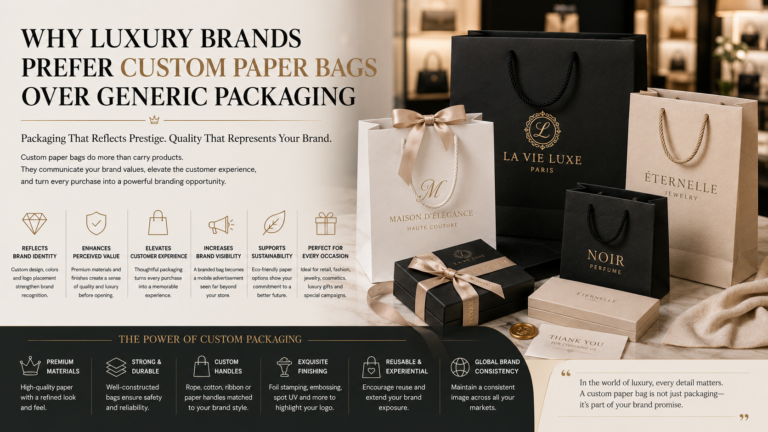

For luxury brands, packaging is rarely just a way to carry a product.
It is part of the customer experience.
When a customer walks out of a luxury boutique carrying a carefully designed shopping bag, the bag communicates something before the product is even opened. The material, color, logo, handle, finishing, and proportions all contribute to the perception of the brand.
This is one reason why luxury fashion, jewelry, cosmetics, and lifestyle brands often prefer custom paper bags over generic packaging.
A generic bag may perform its basic function.
A custom luxury paper bag can do much more.
It can reinforce brand identity, increase perceived value, create a memorable shopping experience, and turn every customer into a potential brand ambassador.
So why do luxury brands invest so much attention in something as simple as a shopping bag?
Let’s take a closer look.
1. Luxury Packaging Starts Before the Product Is Opened
Luxury is heavily connected to experience.
A customer may enter a boutique expecting a premium experience from the moment they walk through the door.
That experience continues when the purchase is placed inside the packaging.
A generic shopping bag can interrupt that experience.
Imagine purchasing a high-value handbag and receiving it in a thin, unbranded bag.
The product may still be excellent, but the presentation feels disconnected.
Now consider:
Premium paper bag + carefully positioned logo + matching handles + high-quality printing + elegant finishing
The packaging immediately feels more aligned with the product.
For luxury brands, that consistency matters.
2. Custom Paper Bags Strengthen Brand Identity
Luxury brands depend heavily on recognition.
A customer may recognize a brand from:
- Logo
- Typography
- Color
- Pattern
- Packaging
- Store design
- Product design
Custom paper bags allow brands to bring these visual elements into the physical shopping experience.
A luxury bag can be designed around the brand’s existing identity.
For example:
Black paper + white logo + black rope handle
creates a minimalist and sophisticated appearance.
Another brand might use:
Cream paper + dark logo + cotton handle
for a softer premium aesthetic.
The objective is not simply to make the bag attractive.
It is to make the bag instantly recognizable as part of the brand.
3. Generic Packaging Looks Interchangeable
Generic packaging has one major weakness:
It doesn’t belong to anyone.
A plain shopping bag may be functional, but it doesn’t communicate where the product came from.
For luxury brands, that is a missed opportunity.
The packaging is one of the few brand assets that customers physically take outside the store.
A generic bag disappears into the background.
A distinctive branded bag can stand out.
This is especially valuable in:
- Shopping malls
- Luxury retail districts
- Airports
- Hotels
- Fashion events
- Tourist destinations
The bag becomes a visible extension of the store.
4. Premium Materials Influence Perceived Quality
Luxury packaging begins with material selection.
Paper bags can be produced using different types of paper depending on the desired appearance and performance.
Kraft Paper
Kraft paper can create a natural, understated aesthetic.
It works particularly well for:
- Sustainable luxury brands
- Handmade products
- Lifestyle brands
- Contemporary fashion
White Card Paper
White card paper provides a clean and refined surface.
It is suitable for:
- Fashion
- Jewelry
- Cosmetics
- Premium retail
Coated Paper
Coated paper can provide a smooth surface and strong printing performance.
It works well when brands require:
- Detailed graphics
- High-quality colors
- Photographic elements
- Smooth finishing
Specialty Paper
Textured and specialty papers can add tactile interest.
For luxury packaging, texture can be especially valuable because customers physically interact with the bag.
5. Thickness and Structure Matter
Luxury packaging should not only look premium.
It should feel premium.
Paper thickness, bag structure, and reinforcement can influence that feeling.
A bag that bends easily or struggles under the weight of a product can weaken the overall experience.
For this reason, brands should consider:
- Paper GSM
- Bag dimensions
- Bottom construction
- Handle attachment
- Reinforcement
- Product weight
The correct specification depends on the product.
A small jewelry bag may have completely different requirements from a large fashion shopping bag.
6. Custom Handles Create a Better Tactile Experience
Handles are often underestimated.
But customers interact with them throughout the entire time they carry the bag.
Luxury brands may choose:
- Cotton rope
- Polyester rope
- Twisted paper
- Flat paper
- Ribbon
Handle color can also be coordinated with the packaging.
For example:
Dark burgundy bag + matching rope + gold logo
can create a sophisticated visual system.
The handle should also be comfortable and strong enough for the expected load.
A beautiful bag with an uncomfortable handle is still a poorly designed bag.
7. Minimalist Design Is Often More Effective
Luxury packaging doesn’t necessarily need more graphics.
In many cases, it needs fewer.
Minimalist packaging may use:
- One logo
- One or two colors
- Plenty of empty space
- High-quality paper
- One carefully selected finishing technique
This creates visual confidence.
Instead of asking:
“What else can we put on the bag?”
luxury brands often benefit from asking:
“What can we remove?”
The result can be cleaner, more recognizable, and more consistent with premium positioning.
8. Finishing Techniques Add a Premium Touch
Custom finishing can make a significant difference to a luxury paper bag.
Popular techniques include:
Foil Stamping
Gold, silver, copper, or other metallic foil can highlight logos and selected design elements.
Gold foil is particularly popular in luxury packaging, but other metallic finishes can create equally sophisticated results.
Embossing
Embossing raises the logo or pattern above the paper surface.
Customers can see and feel the design.
Debossing
Debossing creates a recessed effect.
It can produce a subtle and sophisticated result.
Matte Lamination
A matte surface can create a refined, understated appearance.
Gloss Lamination
Gloss can increase color vibrancy and create a more polished surface.
The best luxury packaging doesn’t necessarily use every finishing option.
One well-executed technique can be enough.
9. Custom Packaging Makes the Brand Experience Consistent
Luxury brands carefully control their visual identity across multiple touchpoints.
That may include:
- Website
- Store interior
- Product packaging
- Shopping bags
- Gift boxes
- Advertising
- Social media
- Printed materials
Custom paper bags allow the shopping experience to remain consistent with the rest of the brand.
Imagine entering a boutique with a carefully designed interior, purchasing a premium product, and then receiving a completely generic bag.
The visual experience suddenly breaks.
Custom packaging prevents that disconnect.
10. Packaging Can Increase Perceived Product Value
Customers don’t evaluate products based only on technical specifications.
They also evaluate:
- Presentation
- Brand reputation
- Experience
- Materials
- Service
- Packaging
A premium package can help communicate that the product deserves careful treatment.
This is particularly important for:
- Jewelry
- Luxury fashion
- Watches
- Cosmetics
- Perfume
- Designer accessories
- Premium gifts
The packaging does not create product quality.
Instead, it communicates and reinforces the quality that already exists.
11. Luxury Paper Bags Become Mobile Brand Advertising
One major advantage of branded shopping bags is visibility.
Once a customer leaves the store, the bag travels with them.
It may be seen by:
- Other shoppers
- Friends
- Colleagues
- Passersby
- Social media followers
The logo becomes visible outside the original retail environment.
Unlike a traditional advertisement, the bag does not need to remain in one place.
It moves.
And when the design is distinctive enough, people may recognize the brand without consciously reading the name.
12. Packaging Supports the Unboxing Experience
Luxury packaging doesn’t end with the shopping bag.
It often forms part of a larger system.
For example:
Shopping Bag → Tissue Paper → Gift Box → Product Pouch → Product → Care Card
Each layer contributes to the experience.
The shopping bag creates the first impression.
The box creates anticipation.
The product reveal creates the emotional payoff.
For online orders, this becomes even more important because packaging may be the customer’s first physical interaction with the brand.
13. Custom Packaging Helps Luxury Brands Control Every Detail
Generic packaging limits control.
A brand may have little influence over:
- Color
- Paper quality
- Handle design
- Logo placement
- Size
- Finishing
- Structure
Custom packaging changes that.
Brands can specify exactly what they need.
For example:
Bag Size: 320 × 120 × 250 mm
Material: White card paper
Printing: 1–2 brand colors
Handle: Cotton rope
Finishing: Matte + gold foil
Logo: Centered
The actual specifications will vary by product and brand.
The important point is that the brand controls the final experience.
14. Custom Packaging Supports Seasonal Campaigns
Luxury brands can also use packaging for limited-edition campaigns.
Examples include:
- Christmas
- Valentine’s Day
- Mother’s Day
- New Year
- Brand anniversaries
- Product launches
- Special collections
The core bag structure can remain consistent while the artwork or finishing changes.
For example:
Standard black bag
can become:
Limited Christmas Edition + gold foil
without completely changing the brand identity.
Seasonal packaging can create a sense of exclusivity while maintaining brand recognition.
15. Sustainable Luxury Packaging Is Becoming More Important
Luxury and sustainability are no longer mutually exclusive.
Many brands are exploring packaging options that reduce unnecessary environmental impact while maintaining a premium appearance.
Potential approaches include:
- Recycled paper
- Responsibly sourced paper
- Reusable bags
- Reduced packaging layers
- Right-sized bags
- Paper-based materials
- Reusable cotton or canvas packaging
The challenge is balancing sustainability with performance and aesthetics.
A sustainable luxury bag still needs to look and feel premium.
This is why material selection and production quality matter.
Brands should also make environmental claims carefully and accurately, based on the actual materials and certifications available.
16. Reusable Bags Can Extend Brand Visibility
Luxury packaging doesn’t always have to be used once.
Reusable canvas, cotton, or non-woven bags can provide longer-term value.
Customers may reuse them for:
- Shopping
- Travel
- Storage
- Daily activities
Every additional use provides another opportunity for the brand to be seen.
For promotional campaigns, reusable bags can therefore serve two roles:
Packaging + Brand Merchandise
This can be particularly valuable for fashion and lifestyle brands.
17. Custom Packaging Helps Differentiate Luxury Brands
Luxury markets can be highly competitive.
Two brands may sell products in similar categories.
Packaging can become another point of differentiation.
Consider the difference between:
Generic bag
and
Distinctive custom bag with recognizable color, texture, logo, and finishing
The second option gives the customer another reason to remember the brand.
Over time, packaging can become part of the brand’s visual language.
18. Packaging Must Match the Product’s Price Point
Luxury does not mean maximum cost.
Packaging should be appropriate for the product.
For example:
Premium Accessories
A high-quality paper bag and branded box may be sufficient.
Fine Jewelry
A rigid box, pouch, premium paper bag, and sophisticated finishing may be more appropriate.
Luxury Fashion
Large reinforced paper bags with premium handles may be required.
High-End Gift Collections
A coordinated bag, box, tissue, ribbon, and insert can create a complete presentation.
The key is alignment.
Packaging should feel appropriate to the value and positioning of the product.
19. Don’t Let Luxury Packaging Become Over-Packaging
There is an important distinction between premium packaging and excessive packaging.
Adding more layers does not automatically create more value.
Too much packaging can increase:
- Material consumption
- Shipping costs
- Storage requirements
- Packaging waste
- Operational complexity
A better strategy is to identify which elements actually contribute to the customer experience.
For example:
Premium paper + strong structure + excellent printing + one finishing technique
may deliver more impact than five unnecessary packaging layers.
Luxury is often about precision, not excess.
20. Standardization Matters for Global Luxury Brands
International brands may have stores across multiple countries.
This creates a packaging consistency challenge.
A global packaging specification can define:
- Paper material
- GSM
- Dimensions
- Printing colors
- Logo position
- Handle type
- Handle color
- Finishing
- Packing method
This helps ensure customers receive a consistent brand experience in different markets.
It also simplifies procurement and repeat orders.
For large B2B buyers, standardized specifications can make packaging management significantly more efficient.
21. Sampling Is Critical Before Mass Production
A digital design cannot fully communicate the physical experience of packaging.
Before placing a large order, brands should review physical samples.
Important points to evaluate include:
- Paper texture
- Color accuracy
- Logo position
- Printing quality
- Handle strength
- Bag structure
- Finishing quality
- Overall proportions
For luxury brands, this step is particularly important because small differences can affect the final perception.
A sample gives the brand an opportunity to identify problems before mass production.
22. What Luxury Brands Should Look for in a Packaging Supplier
A reliable custom packaging supplier should be able to support more than basic printing.
B2B buyers should evaluate:
- Material options
- Custom dimensions
- Printing capabilities
- Finishing techniques
- Sampling
- Quality control
- Production capacity
- MOQ
- Lead time
- Packaging and shipping
- Repeat-order consistency
Ideally, the process should look like:
Design Support → Material Selection → Artwork Approval → Sampling → Production → Quality Control → Packing → Delivery
This gives the brand better control over the final product.
23. How to Build a Luxury Paper Bag Specification
A practical specification might include:
Material
Select kraft, white card, coated, recycled, or specialty paper based on the brand’s positioning.
Size
Determine dimensions based on the products customers typically purchase.
Paper GSM
Select a thickness appropriate for the expected weight and desired tactile experience.
Printing
Define:
- Logo
- Colors
- Artwork
- Printing method
Handles
Select:
- Rope
- Ribbon
- Paper
- Cotton
- Other suitable options
Finishing
Consider:
- Foil
- Embossing
- Debossing
- Matte
- Gloss
Testing
Confirm:
- Load capacity
- Handle strength
- Appearance
- Printing quality
This specification can then become the foundation for repeat production.
24. A Simple Comparison: Generic vs Custom Packaging
| Factor | Generic Packaging | Custom Luxury Packaging |
|---|---|---|
| Brand recognition | Low | High |
| Logo control | Limited | Complete |
| Color options | Limited | Custom |
| Handle options | Standard | Custom |
| Finishing | Limited | Multiple options |
| Customer experience | Functional | Brand-focused |
| Seasonal campaigns | Limited | Flexible |
| Brand differentiation | Low | High |
| Marketing potential | Low | High |
| Repeat-order consistency | Variable | Standardized |
The difference is not simply appearance.
It is control.
Custom packaging gives brands greater control over how customers experience the brand.
25. The ROI of Custom Luxury Packaging
Packaging should be evaluated as part of the overall customer experience.
Its value can come from several areas:
Brand Visibility
Every branded bag creates additional exposure.
Perceived Value
Premium presentation can support a premium positioning.
Customer Experience
Thoughtful packaging can make the purchase more memorable.
Brand Recognition
Consistent visual elements reinforce recognition.
Repeat Exposure
Reusable bags can extend the marketing lifecycle.
Seasonal Marketing
Custom packaging can support campaigns and limited editions.
The exact return depends on the brand, product, market, and packaging strategy.
But for luxury businesses, packaging should not be evaluated only by its unit cost.
Luxury Paper Bag Buyer Checklist
Before ordering custom luxury paper bags, consider:
- Brand positioning
- Target customer
- Product price range
- Paper material
- Paper GSM
- Bag dimensions
- Handle type
- Handle color
- Printing method
- Logo placement
- Finishing
- Sustainability requirements
- Expected load
- MOQ
- Sample approval
- Production capacity
- Quality control
- Lead time
- Shipping requirements
- Repeat-order consistency
Conclusion
Luxury brands prefer custom paper bags over generic packaging for a simple reason: packaging is part of the brand experience.
A custom bag gives a brand control over material, color, structure, handles, printing, finishing, and presentation.
It can strengthen brand recognition, increase perceived value, support seasonal campaigns, improve the customer experience, and create additional visibility after the customer leaves the store.
But premium packaging is not about adding as many features as possible.
The strongest luxury packaging is usually intentional, consistent, functional, and visually restrained.
A carefully selected paper, a precisely positioned logo, a comfortable handle, and one elegant finishing detail can communicate more than a complicated design.
For luxury brands, the shopping bag is not simply the thing carrying the purchase.
It is carrying the brand.